My latest Lenten devotional book, "A Path for Pilgrims,' will be published soon.

Short daily devotions for busy Christians and Church meetings
Showing posts with label devotions for Lent. Show all posts
Showing posts with label devotions for Lent. Show all posts
Friday, January 08, 2016
Devotions for Lent - Lenten Devotion books by John Stuart
Devotions for Lent are becoming more popular among Christians of all denominations. The following e-books contain 40 daily devotions for Lent and can be used individually, in a small group, or family setting. These Lenten devotional books are all available on Amazon. Just click on the boxes and you'll be taken to the home page for each Lent devotional book, with a description of its contents.

Tuesday, March 04, 2014
Kindle Lent Devotions - 3 e-books by John Stuart

For the past three years, I've written a daily devotional ebook for Kindle users. Each book contains 40 daily devotions, personal reflection questions, Bible verses, prayers, and a different piece of art which I have uniquely drawn.
The dailies are short and take about five minutes to read and reflect upon. My purpose is to help busy Christians set aside some quality time to be with God and to make the 40 days of Lent a season of preparation to draw near to Christ.
The following three boxes list each of my books. Please check them out...:)
Also note that Kindle has produced free apps for any digital devices so that Amazon's e-books can be read on PCs, laptops, notebooks, mobile devices, and even MACs of any type!
Thursday, February 07, 2013
Short devotion: Sunday Blessings - Exodus 20:8
Exodus 20:8 “Remember
the Sabbath day by keeping it holy.”
Setting aside a Sunday for
worshiping is becoming harder for post-modern people. We try to cram in as much
as we can each weekend, especially when our families are young. We want to have
wonderful times together, sports to experience, and places to go. Every year,
we get busier and lose the positive impact that keeping a Sabbath can bring. We
are not meant to be hurrying here, there, and everywhere; we are created to
enjoy God’s wonderful works and to praise Him for Life itself.
Some people think that Sundays were
set up by the Roman emperor Constantine as a means of controlling the masses of
folks all over his domain, but Christians had actually been meeting for worship
on Sundays for two centuries before Constantine was born. Early on Sunday
mornings, followers of Jesus met together to re-experience the very First Easter.
Christ’s Resurrection was celebrated and the people basked in the blessings
that God bestowed upon them through Jesus. Their worship centered upon their
faith in the Easter Story – that Jesus had died for their sins and that God had
raised Him from the dead.
I wish that people would make Sunday
morning worship a priority in their lives, not because I want them to be
strictly religious but because of the wonderful blessings that can be experienced
when we give of ourselves to God by devoting that sacred time to Him. Each Sunday
in church brings to each of us an opportunity for increasing our faith,
expanding our knowledge, and deepening our relationship. And, at the end of our
lives, when everything is said, done, and experienced, it is only our
relationship with God through Christ that will survive.
Questions for personal reflection
What does Sunday
mean to me? How do I put God at the center of that sacred day?
Prayer: Lord Jesus, You are the Christ, the
Living Son of God, who died for our sins and rose again to be eternally with
Your Father in Heaven. We have been blessed by Your obedience and saved by Your
sacrifice. Help us and encourage us to honor You on Sundays by worshipping You alongside
of Your people, just like the First Christians. In Your Holy Name, we pray.
Amen.
John
Stuart is the pastor of Erin Presbyterian
Church in Knoxville, Tennessee. If you would like to comment or ask a
question of this message, please send him an email to pastor@erinpresbyterian.org.
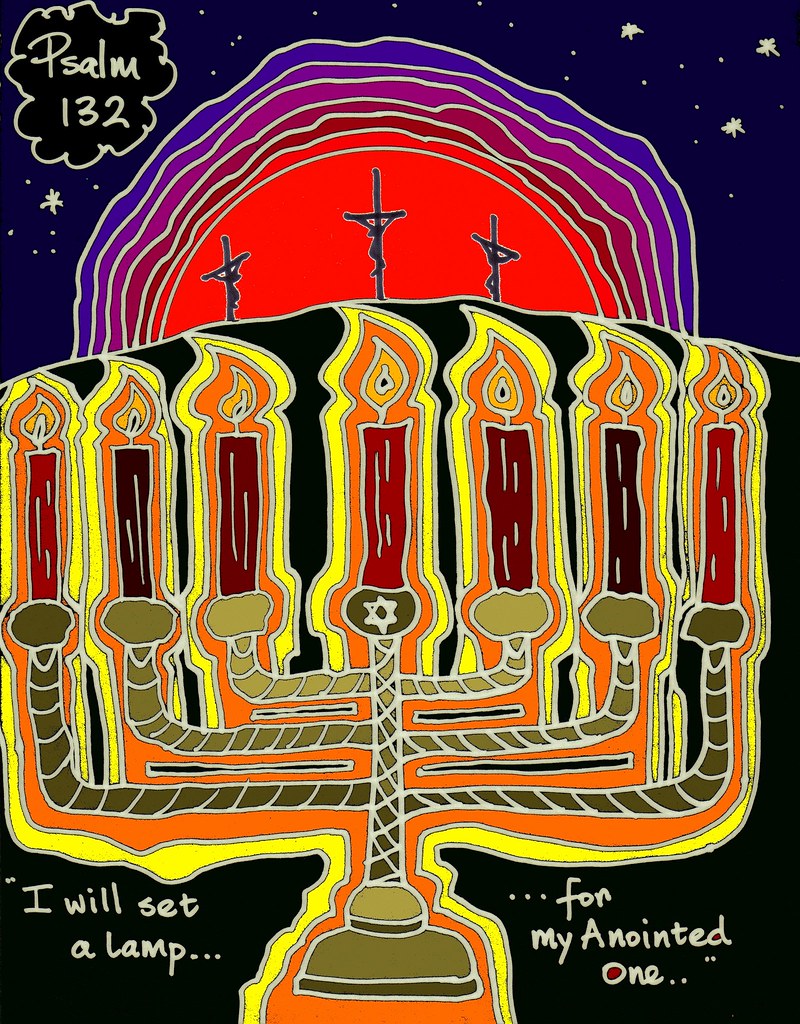
Today’s
image is one of John’s latest psalm drawings. It’s a Messianic interpretation
of a verse from Psalm 132. If you would like to view a larger version, please
click on the following link: http://farm9.staticflickr.com/8363/8402950009_b3fba5c1e9_b.jpg
Thursday, February 16, 2012
Lent Devotions: Always Around - Matthew 26:11
Matthew 26:11 The poor you will always have with you, but you will not always have Me.
 Years ago, when I first became a Christian, I attended a Youth Fellowship program at a church where most of my friends worshipped. It was at the other side of town which meant that I had to get two buses to travel there.
Most of the young people there belonged to the same mid-week evangelical Gospel club that I attended in the heart of Glasgow. There were a few who didn’t and they remained skeptical about giving your life to Jesus. One young guy always used today’s verse as his spiritual barrier from accepting Christ as his Savior. He argued that Jesus was being insensitive and uncaring when He stated that the poor would always be around.
“Instead of just healing the sick,” he often argued, “why couldn’t Jesus get rid of poverty? Helping the poor would have made Him my Savior in my life.”
It was hard to argue against that statement. We really didn’t know then that the Church is truly engaged in the world trying to alleviate poverty every day. We also didn’t understand what Jesus was really saying: ‘help the poor as much as you can because they’ll always be there, but also make and take time to honor me.’
I think Mother Theresa of Calcutta said it best when she talked about helping the poor and serving Christ. “Do something beautiful for God,” she often declared when she addressed church conferences in other countries. In other words, we can help the poor as much as we are able and feel good about ourselves, but when we do it for Christ, we have the added bonus of pleasing God.
Prayer: Lord Jesus, each week You present us with opportunities to help people in need and to serve You. Enable us to do both of these together, as ministry and mission, as well as outreach and worship. In Your Holy Name, we pray. Amen.
John Stuart is the pastor of Erin Presbyterian Church in Knoxville, Tennessee. If you would like to comment on today’s message, please send him an email to pastor@erinpresbyterian.org.
Today’s image is one of John’s latest Psalm drawings. It depicts Psalm 115 and features the verse where God is described as the Maker of Heaven and Earth. If you would like to view a larger version of the drawing, please click on the following link: http://farm8.staticflickr.com/7057/6855709255_a7d20b81df_b.jpg

Wednesday, February 08, 2012
Lent Devotions: Lent Devotions e-book Kindle Your Spirit
A lot of Christians use devotional material to help prepare their hearts and minds for Easter during Lent. This year, I've written a new 40 day devotional e-book to help them through the sacred season.
Anyone who uses a Kindle will be able to download the e-book in seconds. PC people, Android users, and even Mac owners can download the free Kindle app from Amazon.com and then download the book too!
The e-book is full of personal reflections, challenging meditations, and scriptural devotions. Each day also contains one of my art images. Each devotion can be read within 5 minutes. The cost is only $1.99. Most devotional books cost around $9.99 these days.
Click on the box below and enjoy a sample of what the book has to offer...:)
Anyone who uses a Kindle will be able to download the e-book in seconds. PC people, Android users, and even Mac owners can download the free Kindle app from Amazon.com and then download the book too!
The e-book is full of personal reflections, challenging meditations, and scriptural devotions. Each day also contains one of my art images. Each devotion can be read within 5 minutes. The cost is only $1.99. Most devotional books cost around $9.99 these days.
Click on the box below and enjoy a sample of what the book has to offer...:)
Monday, April 11, 2011
Lent devotions: Christ, Our Champion - Hebrews 2:18
Hebrews 2:18 Because He Himself suffered when He was tempted, He is able to help those who are being tempted.
 This is one of the most important verses in the Bible and a divine promise that I cling to day after day. I honestly don’t think that I could maintain my faith without this blessing. I make mistakes again and again. I’m tempted to do wrong things repeatedly. I’m far from perfect and like everybody else, I lead a sinful life. Only Christ can rescue me from the temptations I face. Only Jesus can redeem me from the sins I still commit.
And Jesus can do this, not only because He has the divine power, but because He also knew of the human struggle and emotional wrestling that accompanies temptation. Christ was sinless, but that doesn’t mean He wasn’t goaded by the devil. Jesus obeyed God completely, but that was only accomplished by constantly overcoming temptation.
In other words, because Jesus knows what we go through, He understands our struggles and can forgive our sins. It doesn’t mean that He condones what we do or totally excuses us – if that was the case, we could rid ourselves of our consciences and do whatever we wanted. Jesus forgives us when we fail because He wants to restore us to God’s blessing, but not even He with all of His empathy about our tempting times and sinful situations can pardon us without our contrition, our sorrow, and our shame.
So what does this mean for all of us? Perhaps you’re struggling with a temptation that is breaking your resolve; maybe you’ve done something bad that you deeply regret. Whatever the facts, know this: we can come to Jesus sincerely and contritely to ask His forgiveness. He understands our predicament and only wants to restore us to God’s love. If we come to Him today, He will pardon our sins and change our lives. All we need to do is ask.
Prayer: Lord Jesus, You were tempted innumerable times throughout Your life, so You perfectly understand what we go through each day. Help us to come to You with our guilt and pride, our shame and regrets so that we may place them at Your feet and put our lives back into Your hands. Forgive us for every sin that we have ever committed, whether we remember them or not. In Your Holy Name, we sincerely pray. Amen.
John Stuart is currently the pastor of Erin Presbyterian Church in Knoxville, Tennessee. If you would like to comment or ask questions of today’s message, please send him an email to pastor@erinpresbyterian.org.
Today’s image is one of John’s stained glass designs for Easter. It’s called “Cross of Many Colors.” If you would like to view a larger image of the drawing, please visit the following link: http://farm3.static.flickr.com/2282/2301426682_7f0b9c037f_b.jpg

Tuesday, March 08, 2011
Lent devotion: Growing Godliness - 1 Timothy 4

1 Timothy 4:8 For physical training is of some value, but godliness has value for all things, holding promise for both the present life and the life to come
Tomorrow, Lent begins with Ash Wednesday and people all over the world will be thinking about what they can give up throughout the next six weeks. For some, it will be chocolate, candies, or desserts. For others, it may be red meat, fatty foods, or high calorie dishes. Still others may give up bad habits like smoking, drinking, or gambling. However, isn’t the whole point of Lent about trying to prepare ourselves spiritually to receive Christ, but not necessarily as thinner or healthier people?
So what about doing something positive for Lent instead of just giving up on something negative? What about growing our godliness instead of healthiness? What about cultivating the spiritual side of our lives instead of just looking after the physical frame we belong to?
How about setting aside time to read the Bible instead of Facebook? What about taking time to really pray instead of winging it each day? What about asking God to guide our future and show us what He wants for our lives, instead of taking Him for granted and automatically asking Him to bless our choices, our decisions, and our plans?
That would be a Lent worth keeping. That would be enriching our godliness and growing our faith. That would be worthy of our time and Christ’s ways.
Prayer: Lord Jesus, as we begin the Fast of Lent, show us new ways to grow godliness in our lives. Help us to see what is eternal and everlasting within us. Enable us to focus upon increasing the fruits of the Spirit each day of Lent. Draw us nearer and closer to You. In Your Holy Name, we pray. Amen.
John Stuart is currently the pastor of Erin Presbyterian Church in Knoxville, Tennessee. If you would like to comment or ask questions of today’s message, please send him an email to pastor@erinpresbyterian.org.
Today’s image is one of John’s latest Lighthouse drawings. It depicts a silhouetted Venetian lighthouse at sunset on the Greek coast. It’s called “Katapausis,” which is the Greek word for “Sabbath Rest.” You can view a larger version of this drawing at the following link:

Friday, February 26, 2010
Lent Devotions: Puzzling Preacher

Mark 6:20b When Herod heard John, he was greatly puzzled; yet he liked to listen to him.
There’s a story told about a Protestant pastor who was arrested by the Gestapo in Nazi Germany. As well as being tortured and interrogated, he was also summoned into the presence of Hitler to talk about faith and theology. On each occasion, the pastor was so terrified that he could hardly say anything. Years later, when the war ended, he regretted the fact that he didn’t use his faith to make the evil dictator change his course. Hitler had appeared ready to listen, but the pastor couldn’t get over his fear.
It appears that Herod, the cruel king of Judah, was also willing to listen to a preacher. From the Gospels we learn that Herod liked to listen to John the Baptist, but was greatly puzzled by what he had to say. John must have challenged Herod’s thinking and stirred his conscience in ways that other men could not. Herod was so used to having his own way on his own terms that John’s words were so different. The preacher was telling the king to repent and this puzzled Herod because he ruled absolutely and had no trouble with his decisions. But there was something in John’s preaching that left him troubled and unsettled, possibly because Herod came up against direct honesty for the first time in his life.
I read a survey this morning from the Pew Research Council which seems to reveal that young people between the ages of 18-29 believe in God, but that they have no need for institutionalized religion or preachers. It makes me wonder what kind of faith that they really have (or don’t have). I know that Christ, the Holy Son of God, still went to worship in traditional institutionalized faith gatherings each week. I also know that it was His preaching that changed the world and that after Pentecost, all the remaining disciples became preachers. They shook up the world and, I firmly believe, they are still capable of doing that today.
Prayer: Lord Jesus, we thank You for the gift of preaching and for the preachers who have influenced our lives, affected our ways, and challenged our ideas. We pray that You will raise up a new generation of young preachers who can relate to their peers in honest, direct, and challenging ways. In Your Holy Name, we pray. Amen.
John Stuart is the pastor of Erin Presbyterian Church in Knoxville, Tennessee. If you would like to comment on today’s message, please send him an email to pastor@erinpresbyterian.org.
Today’s image is John’s drawing of a bluebird and is called “First of Spring.” It’s part of his bird series which you can view online at http://www.flickr.com/photos/traqair57/sets/72157623366524553/detail/
Thursday, February 25, 2010
Lent Devotions: Jesus the Christ - Mark 6 v 13
Mark 6:13 They drove out many demons and anointed many sick people with oil and healed them.
The word ‘Christ’ means ‘the Anointed One’ and it was meant to signify that Jesus was specially chosen, divinely honored, and majestically exalted by God to be the Savior of His people. Anointing was primarily reserved for those who were to be crowned as ruler of a nation. Usually a priest did the anointing by pouring some precious oil on the forehead of the crown prince or high born ruler. If you look back at the old black and white recordings of the coronation of Queen Elizabeth II of Britain
In today’s Gospel passage, Christ uses anointing in a different way. Instead of reserving it for divinely chosen people and godly rulers, Jesus teaches the disciples to anoint those who are sick with oil before actually healing them. It’s as if Christ wanted to share His anointment with other people, especially those who were seriously sick and possibly at death’s door. Anointment then became an act of divine compassion instead of a holy rite of elitism. Jesus let His disciples show the weak and ill that they were not being punished by God, but instead that they were honored by God with His love, grace, and healing. Just as John was called the Baptist because he baptized people in the Jordan
Today we are all in need of God’s grace and Christ’s compassionate anointment. We have emotional, mental, and physical pains that bother, bruise, and burden us. Christ has the power to release us from past hurts and disappointments, present difficulties and circumstances, anxious moments and insecurity. If we allow Him into our lives, He can and will anoint us to heal us of the past, hold on to us presently, and lead us towards heaven and everlasting peace.
Prayer: Lord Jesus, You are the Christ, the Holy One chosen of God, who rules the universe, reconciles creation, and heals the entire world. You anointed the Earth with Your precious blood. You saved us from sin and compassionately healed the breach that separates us from God. Hallelujah! What a Savior! Amen.
John Stuart is the pastor of Erin Presbyterian Church in Knoxville , Tennessee
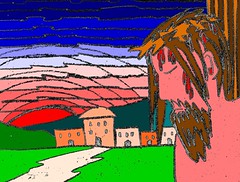
Today’s image is from John’s Feast of Easter series and is called “Two More Days.” If you want to view the series, you can see them at the following link: http://www.flickr.com/photos/traqair57/sets/72157600054864349/detail/
Wednesday, February 24, 2010
Lent Devotions: Lacking Faith - Mark 6 v 6

Mark 6:6 And he was amazed at their lack of faith.
It is said that ‘familiarity breeds contempt,’ so Jesus must have experienced some of that in His hometown. His own community, made up of people He knew as neighbors and colleagues, just couldn’t accept Christ for what He had become. They knew enough about His family and His local history to let that information become a barrier. He had become more than they could accept. He was beyond their knowledge and control.
I think that the present generation of Christians is suffering from the same parochial mentality. We have grown up knowing about Christ since our days of Sunday School kindergarten. Jesus has been a part of our stories for as far as back as we can remember, so we think that we know who He really is.
But when we go out into the world, we meet up with other faiths, other religions, and other historical leaders. We begin to mesh our ideas about Jesus with other religious ways. Instead of uniquely calling Him Savior and Lord, we keep Him on an equal basis with the likes of Moses, Muhammad, Buddha, Krishna , and Gandhi. The Jesus that we know is kept under control and shaped into what we want Him to be. Rather than declare Him as Lord of the Universe and Savior of the World, we seek to be non-offensive to other religions by declaring that we all worship the same God. In other words, just like the people of Capernaum
I firmly believe that if Christ were to walk into most mainline denominational churches, He would be amazed at our lack of real, sincere, and true faith in Him. We have become slaves to the culture instead of disciples of Christ’s Church.
That’s why I preach, teach, and write the way that I do – for me, there is no compromising Christ’s divinity; there is no diluting of His Lordship, and there is no belittling of His unique and holy status of being the Only Savior of the world. It’s all or nothing for me, and if people really read the Gospels, they would know that it’s all or nothing with Christ too.
Prayer: Lord Jesus, You are not a Westernized Gandhi or Buddha. You are not equivalent to Moses or Muhammad. You are not the Krishna who appears at a time of crisis or the avatar who enters into the world to avert disaster. You are infinitely above and beyond all of them. You are Jesus Christ, the Living Son of God, the Only Savior of the World, and the Holy One who has the words, works, and way to everlasting life. In Your Holy Name, we uniquely pray. Amen.
John Stuart is the pastor of Erin Presbyterian Church in Knoxville , Tennessee
Tuesday, February 23, 2010
Lent Devotions: Out of Deep Waters - Psalm 18

Psalm 18:16 He reached down from on high and took hold of me; he drew me out of deep waters.
For a couple of summers I used to help out for a week at our Presbytery’s Outdoor Camp Site at John Knox. I was friends with the director at the time and he invited me to go canoeing for a week with the middle schoolers. We went all over East Tennessee and North Carolina
The next summer I went back to the camp to do the same thing, but this time my friend was unable to lead the group. I spent most of the week driving the minivan or transporting the canoes to predetermined locations. I did get to go canoeing a couple of times during which I almost drowned.
The group was headed down a fast flowing river and all of a sudden my canoe overturned. Both I and the other leader ended up beneath the canoe and struggled to reach the surface. I remember thinking for a brief second that this was it. Green reeds were flowing around me and I was being buffeted and bashed by the strong current. My greatest fear was getting a foot stuck under a rock, so I leaned back in the water and let myself float to the surface. Within seconds I was gasping for air and dragging myself and the canoe back to the river bank. The other leader was already there.
When the psalmist writes about God drawing him out of deep waters, he’s talking about a salvation experience. His life is full of trouble and his foes are all around him. His faith in God assures him, so that when the worst does come, he knows that the Lord’s presence will help him endure and overcome the crisis. He is completely confident that he will be delivered from death and rescued from despair.
We all go through times when circumstances threaten to engulf our lives and overwhelm our days. We feel as if we’re emotionally drowning and our anxieties make us feel totally insecure. That’s where faith plays a key role in overcoming our troubles and winning the struggle. For the psalmist, it was the presence of the Lord that saved him; for us Christians it is the Spirit of Jesus who rescues us.
Prayer: Lord Jesus, You know everything about what we are going through today, this week, and at this time. We rely upon You to be our strength when we are weak, to be our Guide when we are lost, and to be our Savior when we are in trouble. Hear our prayers and heal our lives. In Your Holy Name, we ask. Amen.
John Stuart is the pastor of Erin Presbyterian Church in Knoxville , Tennessee
Today’s image is taken from John’s waterfall series and is called “Appalachian Spring.” You can view the rest of the series online at http://www.flickr.com/photos/traqair57/sets/72157622666059885/detail/
Wednesday, February 17, 2010
Lent Devotions: Fishing for Souls - Mark 4 v 36

Mark 4:36 Leaving the crowd behind, they took him along, just as he was, in the boat. There were also other boats with him.
There’s a wonderful 17th century painting created by a Dutch artist Adriaen van den Venne called “Fishing for Souls,” which depicts the confusion during the time of the Reformation. It’s a picture of a stormy lake and many people are struggling in the water. Different boats are full of Roman Catholic and Protestant clergy trying to help the swimmers get into their vessels. On either side of the lake, hundreds of safe spectators are watching the whole tumultuous scene.
Venne portrays the anxiety that common people were feeling at that time. They didn’t know which side to turn to for salvation. The Roman Catholic Church excommunicated all Protestants and the Reformers called the Pope the Anti-Christ. Millions of people were caught in the middle of this gigantic theological struggle and were deeply troubled about the final destination of their souls. If they chose the wrong boat then they could end up on the wrong side of eternity.
Thankfully, we seem to have healed much that divides the Roman Catholic Church and Protestantism today. If van den Venne was still around, he would probably paint a picture of boats and shores that contained both Roman Catholic priests and Protestant pastors in the same vessels. Souls would still be struggling in the water, but at least Christ’s Church would be working together to rescue the perishing.
It’s Ash Wednesday which officially marks the beginning of Lent. Although I do not practice the rite of placing penitential ash thumb marks on my head, I do give thanks that some of my brothers and sisters in Christ do experience this. If this brings people closer to God, to seek His forgiveness and receive His pardon, then it is a good thing. After all, we’re all in the same boat wanting the same thing: the salvation of all souls throughout the world.
Prayer: Lord Jesus, thank You for steering our lives towards You and for allowing us to climb aboard God’s Kingdom. May Your holiness and salvation be experienced by hundreds of millions of people throughout the world on this first day of Lent. Prepare our hearts and minds for the Cross that is to come and the Resurrection that will be realized. In Your Holy Name, we pray. Amen.
John Stuart is the pastor of Erin Presbyterian Church in Knoxville , Tennessee
Sunday, March 01, 2009
Sunday Devotional: Back to The Future
 Lectionary verse: Psalm 25:7 Remember not the sins of my youth and my rebellious ways; according to your love remember me, for you are good, O LORD.
Most of the psalms in the Bible are written by David, Israel’s greatest king. Usually, they have been written during his moments of great strength, faith, and creativity. It’s as if the vitality of David made him want to write some wonderful songs. And, if you think of it, most songwriters compose their best songs, lyrics, and tunes when they are between the ages of 25 – 45.
Today’s sacred poem is a bit different. I think that it’s written by an elderly David who is reflecting upon his life, his past mistakes, and deepest regrets. He’s looking back on some of his rash choices and poor decisions in his long life. And like anyone else who happens to be an elderly citizen, he wishes that things had been different and hopes that God will be merciful. You see, David is preparing for his final finals – he knows that one day soon, he will be face to face with God.
I don’t know about you, but when I look back at my own crazy past I want to give myself a good shaking down - especially when I was a teenager and in my early twenties. In my mind’s eye, I see myself saying and doing foolish and despicable things, or what David so eloquently calls ‘the sins of my youth and my rebellious ways.’ I wish that I could go back to the past and alter things, but I can’t. And if, at the end of my life, anyone asks me “would you change anything?” I would have to answer with a resounding “yes!”
David’s problem with his past causes him concern for his eternal future. He wants God to forget about the many mistakes and wicked deeds that even he, the greatest Israelite King, had committed. He’s begging God to set aside all of those sinful times that contaminated his faith, his family, and his friendships. In other words, David is looking for a mulligan, as far as his life is concerned. He wants God to bend the rules, show some mercy, and apply some grace so that he can die and rest peacefully.
You see David did not have the wonderful opportunity to cast his sins upon Christ’s Cross to be redeemed, and although he made many sacrifices in the Holy Temple each year, the king still carried the burden of a sinful past. Today, we are more fortunate because we can directly, sincerely, and humbly appeal to Jesus for the forgiveness of our sins. We can go back beyond our own sinful past to centuries before we were born and hang our mistakes, our guilt, and our regrets on a tree called Calvary.
We can also come to a Table full of mercy, forgiveness, and peace, instead of an altar streaming with blood, terror, and fear. If David knew then what we know today, then his anxiety and angst, troubles and tribulation over his youthful sins and rebellious ways would have been swept away by the blood of our precious Savior, Jesus Christ.
So, when we read today’s psalm and Gospel lesson, let’s give thanks to God that we live in a merciful time, where the Good News of salvation can be given to every sinner, just like ourselves, who personally comes to Jesus, seeks His mercy, and receives God grace. We go back to the past in order to move on to the eternal future where faith sets us free from fear, hope handles all our doubts, and love cleanses our sins forever.
John Stuart is the pastor of Erin Presbyterian Church in Knoxville, Tennessee. He regularily writes a devotional blog called Heaven's Highway.
The illustration was drawn by John. It is called "Lenten Prayer." You can see more of John's liturgical art at his webpage Stushie's Art.
Subscribe to:
Posts (Atom)