Showing posts with label New Age. Show all posts

Tuesday, July 01, 2008

A New Earth: Chapter Five

I find it difficult to continue to read this book - there are so many untruths about Christ and christianity that I can hardly go on.
(new Pages have been added)

Page 129 Tolle refers to the voice in his head again. I’m beginning to think this guy is schizoid. He also refers to karma on this page, which is a Buddhist/Hinduistic term. There is no such thing as karma in Christianity.

Page 130 Nothing of consequence.

Page 131 Tolle writes about ‘phonies.’ Is this a subliminal fear that Oprah has? Is she afraid of her work being ‘superficial?’

Tolle talks about modern people ‘always trying to get home, but never reach it.’ Perhaps if Tolle and his readers were to read John 14, they might suddenly find it!

Tolle writes about modern writers writing about the modern human dilemma, but never offering a solution. He doesn’t seem to understand that this comes about because most of them lacked faith.

Page 132 Tolle expresses emotions in a holistic sense. His material on this page could have been written from a manual of the Christian Scientists.

Page 133 Tolle refers to Gaia…the complex being that is planet earth. This is definitely New Age stuff.

Refers to primordial fear and anger…fight or flight…nothing new here.

Tolle suggest that emotion is the body’s respond to thought. An inward reaction to an outward circumstance.

Page 134 Tolle suggests that toxic energy in our system is built up through anxious thoughts. This is New Age hooey. There is no scientific evidence for any of this. Tolle is waffling here and wallowing in his own thoughts. Is he suffering from the same self-promulgated narcissism that he talks about through like his own suppositions and thoughts, rather than the ones he can actually prove?

Page 135 The voice in the head tells the story that the body believes…this is what he calls emotional storytelling. Is Tolle making a negative inference about the Church and its teaching?

“Life always lets you down”…is this a great part of Tolle’s personal reality?

He talks about self-esteem being low…is he empathizing with his women readers????

Page 136 Tolle lists a whole lot of negative qualities/experiences and claims that they all disrupt the energy flow through the body, heart, and immune system. Almost same kind of list of sins against the Spirit. Galatians.

All negative emotions equals unhappiness to Tolle. But is a lack of happiness really unhappiness?

Page 137 Love is a possessiveness and addiction that can turn to hatred…is Tolle reaching out to his readers who have bad relationships???? Clever, very clever…

There is not good without bad, no high without low. This is dualism, which is not Christian. God is good – He was when bad did not exist, and He will continue to be when bad ceases to exist.

States of Being positively emanate from love joy, peace…Tolle almost lists the fruits of the Spirit found in Galatians.

Page 138 We are a species that has lost its way…which is why Jesus came into the world – to show us the way back through Him.

Page 139 the present moment is where we find power…the experience of now. This is Buddhist teaching. In Christianity, the only real now is God…I AM WHO I AM. Tolle is once again displacing God for our own existential experience.

Relates story about two monks – Tanzan and Ekido. Old story…good point.

Page 140 memories become our emotional prisons. If we don’t let go of the past, our past won’t let go of us. Is Tolle talking about the past, or is he surreptitiously meaning ‘tradition?’

We hang on to our old emotions and they become our identity…which is why Christ invites us to come to Him…to liberate us from the past and find our new identity in Him.

Page 141 …nothing ever happened in the past etc….this is sophistry. He’s trying to sound clever, but as Ecclesiastes might say…it’s just vanity.

Tolle talks about children growing up with negative emotions…he’s linking to mothers who worry about their kids…clever reader prospecting here.

Page 142…nobody can go through childhood without suffering emotional pain. This is true.

Remnants of pain and negative emotion forms an energy field…this is Star Trekking again. Perhaps Tolle has accumulated most of his ideas through the imagination of Gene Roddenberry.

Page 143 … the collective pain-body is probably encoded within every human’s DNA…although it hasn’t been discovered yet….WOW! This is mythical, NEW AGE stuff…

Emotional pain-body is carried by every new born….is Tolle equating this with original sin??? Human pain…isn’t this what we Christians call separation or alienation from God?

People with pain bodies are better equipped to awaken spiritually…clever, Tolle, clever. He’s sympathizing with his readers.

Page 144…WOW! Tolle refers to Jesus as CHRIST. …with regard to His suffering…Tolle sees Christ as the archetypal human, embodying pain and the possibility of transcendence. In other words, Tolle is equating Christ’s pain with our own and nothing more. There’s no sacrifice for the world to redeem it for God.

Pain body is a semi-autonomous energy form…this is absolute baloney…talks about this needing to be fed…and vibrating at a certain frequency. This is some wild stuff, although some forms of Buddhism talk about vibrations drawing forth dark evil forces…

Page 145 The pain body is an addiction to unhappiness…misery loves company??

Pain body, negativity, and depression…is Tolle relating to a lot of women???

Page 146: Pain body feeds on thought energy…thoughts operate and vibrate at a higher frequency…there is no scientific evidence of this. This sounds like something from Reno:The Excutioner stories…

Page 147: A lot of this page is like an episode of Deep Space Nine where a character (Jake) is taken over by the MUSE.

Voice in head tells sad, anxious or angry stories about self, other people, and situations…This is schizoid…this makes me very wary about Tolle and his own mental stability.

Pain body devours negative thoughts…this is absolute garbage…

Page 148 Pain body – a psychic parasite….emotional vampirism.

Pain body pushes other people’s buttons…in other words, no responsibility…I can hear it now: It wasn’t me, it was my pain body that did it!

Tolle lays on a guilt trip for unstable parents when he writes about millions of children going through upheaval because of their parents’ agitated pain bodies…This guy piles on guilt like an old Irish priest, which is a method of gaining control. If Tolle can make his readers feel guilty, then he can also hold out the carrot of absolution, salvation, etc…

Page 149: Pain body is the reason for alcoholism and violence in men…The person who is talking and making promises, however, is not the entity that commits the violence…This is transference. Tolle is condoning violence by suggesting it is not a personal choice but an activation of the pain body…

People think they fall in love, but actually their pain-bodies compliment each other…Tolle must have had some bad relationship experiences. This sounds more like sour grapes to me.

Page 150: Pain bodies keep dormant and then jump into action when triggered….Tolle writes a stereotypical page about honeymoon arguments. This is not good psychology…this is pseudo-psychology…Tolle appears to blame all conflicts on pain bodies, instead of blaming it on people themselves.

Page 151: Pain body distorts reality with fear, hostility, and anger…blinded by emotions. All of a sudden the person you love has a different face…the pain-body has taken possession. Choose someone as your partner whose pain body is not excessively dense.???

The only excessively dense people are the ones who think this book will transform them.

(Still to be finalized)

Monday, May 12, 2008

A New Earth - Part 2

Continuing a page by page critique of Eckhart Tolle's book "A New Earth", which Oprah is promoting. Christians should be aware of the unChristian theology and heresy that is being presented throughout this book.

A New Earth: Critique on Chapter Two

Page 25: Tolle suggests that words are mere labels, and totally ineffective when it comes to knowing something truly. It fascinates me that Tolle insists in using words to describe this. I think he is beginning to use this for a later argument that the words we use to label God are useless because God is totally unknowable.

We know something of this from scripture: God’s ways are mysterious, yet because His thoughts and ways are not our own, He uses scriptural words and sacred history to reveal Himself to us. Tolle also forgets that God (Genesis 2) gives man the gift of naming animals, thus the source of these ‘labels” comes from God.

Tolle is using this line of argument to show us that there can be no absolutes, i.e. we only know the tip of the iceberg, so therefore we cannot be certain of anything.

Page 26: Tolle talks about the Source of all life (this is an oblique form of Deism), however he then talks about objects pointing back to this Source, to God, to yourself. This is new Age stuff…of equating ourselves with God ( which, BTW, was the original sin in the Garden of Eden).

Talks about essence being communicate from all types of objects. Tolle should perhaps read Isaiah 46!

Uses an illustration of Van Gogh feeling the Beingness of the Chair in his painting…but the painting is about VG’s genius and artistic talent, not the chair!

Tolle talks about us becoming obsessed by thoughts and words, and losing our transformational spirituality in the process…but the intricacy of our language is what makes us distinctly human!

Talks about our essential self, which can only be discovered if we disentangle ourselves from all labels and images….this sounds very like Buddhism.

Page 27: Tolle insists that labels make us shallow; we may know words but lose wisdom. This is absurd. Almost all of human wisdom has been saved with words. Without the words of previous generations, we would have lost wisdom! E.g. Renaissance occurs when Greek literature is rediscovered.
We also establish relationships with others through the knowing of our names.

Tolle is beginning to say that we are imprisoned by words…he’s going to use this as a means for rejecting scripture. He also says that the human mind does not amount to much…as compared to the mind of God perhaps, but to other planetary species, the human mind is amazing.

Tolle starts to talk about the “primordial error,” which is too much of a focus on “I.” This is what we would call original sin.

Page 28: Tolle quotes Einstein and follows his thoughts upon being isolated from the whole of existence – that we are aware of everything around us as part of an optical illusion of consciousness. But the writer of Psalm 8 went there before Einstein and Tolle – “when I consider that stars & the heavens, the works of your fingers, what am I…?” It’s called ontology – why do we exist?

Tolle suggests that everything is an illusion and that when we recognize this, the illusion will cease to exist. This is classic Buddhism – Nirvana
Paul however would suggest that now we see through a glass darkly, but then face-to-face…the illusion will not dissolve, but that which we poorly see will become more real. Calvin talks about this with regard to sunflowers – people look at them and see the glory of the flowers, but they forget to look above and see the actual sun!

Tolle continues to insist that using the book will lead to enlightenment – I can hear Obi wan Kenobi saying it: “Use the Book, Luke!”

Tolle suggests that when we use the word “I” we are not talking about ourselves – then who are we talking about? This could have moral consequences of personal disassociation e.g. George Washington: I cannot tell a lie, father. It was I (but not really who I am)????

Page 29: Tolle begins to talk about the I-thought as something separate from ourselves. This may be something similar to Martin Buber’s teaching in I-Thou.

Tolle states that we built up our identities through the things we claim as our own. This is called materialism. Jesus would teach against this as follows: “Where your heart is, there your treasure lies.”

He talks about our I-dentity as being precariously bundled together to form an illusory sense of self. But this is not precarious at all; all of this is natural.

Page 30: Tolle talks about a new awakening, a deeper sense of “I” – this is self-centered spirituality, which once again displaces God for ourselves.

Talks about materialistic “I” superseding the deeply, spiritual “I.” There is almost something Jungian in this. Thought begins to possess the mind, heart, and soul. The “I” takes over everything – Greek Orthodox mysticism has something similar – the eo?

Tolle writes about the process of dis-identifying from your thoughts. Instead of being thought-entangled, you experience peace. This is Buddhism, compartmentalism, or border-line schizophrenia. I’m beginning to wonder if Tolle suffers from this.

Pages 30-33: After arguing against being identified with the ego “I,” Tolle then proceeds to give an autobiographical account of an event in his life…isn’t he arguing against himself here?????

Page 33: Tolle writes about experiencing a detachment from his mind. “Life isn’t as serious as my mind makes it out to be.”

Jesus would say: Come to me, all of you who are burden and rest in me.”

Tolle talks about three years of anxiety, depression, and suicidal tendencies….uh oh! He becomes free of compulsive thinking and of the false, mind-made I. This could be psychologically serious, folks.

Page 34: Tolle doubts the absolute validity of the human intellect – here it comes: there are no absolutes. Thinking is only a tiny aspect of the consciousness that we are…???? And yet, isn’t Tolle using his tiny thinking capacity to write this book?

Egoic mind conditioned by the past – subtle implication that if religion drives the mind, then it is out-dated too.
Page 35: The mind unconsciously wants to identify with something other than itself – whereas Christians would say that we strive for completion, but will only find it when we discover God.

Tolle writes that people do perceive the success of themselves through the objects they possess. True.

Page 36: We buy things to enhance our identity – build our esteem…true. The egoic mind unconsciously wants to identify with structure (Tolle will use this to reject institutionalized religion).

Ego-satisfaction is short lived – keep looking for more, something better: but couldn’t the same be said for Tolle’s followers? Aren’t they looking for something better than the past? Is it the novelty of this philosophy that is driving millions towards it? He’s arguing against himself.

Page 37: Each thing has beingness and origin in the formless one Life – Buddhism. Again, read Isaiah 46, Tolle.

Most people don’t inhabit a living reality, but a conceptualized one. This is Buddhism – why doesn’t he call it this?

The unchecked striving for more, for endless growth is a dysfunction and a disease. Anti-materialistic. Also Hinduism. Christians would call this the sin of avarice and greed.

Pages 38-41: Tolle’s first person story about the Lost Ring. Letting go of the things we possess, or that posses us.

Page 40: Tolle now calls beingness “I AM-ness” This is highly controversial. “I AM” is the sacred Name of God. Tolle is discarding God for himself. Christians should understand what is happening here. God is being replaced totally. Instead of being Christo-centric, Tolle is, funnily enough, urging his readers to become ego-centric!

Page 41: Life will give you whatever experience is most helpful for the evolution of your consciousness…Paul would say that troubles lead to endurance, and in turn to faith in Christ. Tolle is advocating that our life experiences are meant to give us a higher spirituality, whereas, for the Christian, we go through experiences to lead us closer to Christ. It’s not about us; it’s about glorifying Jesus.

Page 42: Tolle insists that the ego isn’t wrong: it’s just unconscious. He is absolving us from accountability and responsibility for our sins. We’re all absolved from our greed…this isn’t Christian. This is self-centered pandering to our pride which doesn’t want to be humbled by any divine absolutes.

Page 43: Tolle suggests that on our death bed everything falls away and that no thing has anything to do with who we are/were. However, to Christians, this is not true. It’s what we do with what we have that is very important to who we are to God. NB – Christ’s Parable of the Hidden Talents.

Tolle again quotes Jesus and insists that the poor in spirit are those with no internal baggage, no “identifications.” Once again he is twisting Christ’s words to suit his theory. When Jesus mentions the poor in spirit he is referring to those who are spiritually poor and sincerely faithful – it’s nothing to do with what Tolle alludes. He also describes the kingdom of heaven as being the “simple but profound joy of Being” – this is so trite and diminishes what Christ means by the Kingdom of God – once again it’s not about us or our existence, it’s about God.

Page 44: Tolle states that the egoic mind patter sees itself as right and others wrong. He is trying to disarm his opponents, whilst at the same time bolstering his followers with the old argument of “they’re out to get us” type of cult mentality.

Mentions absurdity of land ownership & talks of the “white” settlement – isn’t this racist? Also, how much “land” does Oprah possess? And what about Tolle himself with the success of his books? Is this a barb of land-envy, or will it lead to a one world, one belief, one path viewpoint?

Page 45: Ego = the more I have, the more I am…Oprah: the more I have, the less I need to believe in God????

Collective delusion and chasing after things…anti-materialism, Buddhist??? Christian vow of poverty???

Page 46: “I am the awareness that is aware…” ego-centric theism. Tolle should read Daniel 4 – Nebuchadnezzar’s awareness story….

I don’t have enough yet…= I am not enough yet. Parallel with Christ’s parable about the successful farmer who wants to build bigger barns.

Ownership is a fiction – delusion which is Buddhist. However, you could argue Psalm 24…”the earth is the Lord’s and all that is contained therein”

Greed is an addictive need – but people like Tolle can also be spiritually greedy – I want more than Christ can give me…

Page 47: Tolle has a few good paragraphs about bulimia – is he trying to connect with women who have eating disorders? Is this a sincere example or a way of exploiting the problems of his readers????

Unfulfilled wanting leads to unease, restlessness, boredom, anxiety, and dissatisfaction. Paul would counter these with the fruits of the Spirit from Galatians.

Page 48: Tolle rants against the large corporations which is ironic because his patron, Oprah, has managed to market herself into becoming a corporation….

He talks about the egoic structures never satisfying you…will he transfer this onto the Church???

Page 49: gender = identity: fulfilling our gender identity is the means of fulfilling our lives. Talks about good looks, strength, and appearance…and how we have become obsessed with such. Appealing to his readers and the pressure they put themselves under????

Page 50: Talks about Bulimia and anorexia addicts having egoic dysfunction…healing can only come from within. Self transformation.

Tolle starts to express his view of the body not being important…this is both Buddhist and Gnostic.

Page 51: As the body weakens, the light of consciousness begins to shine – Buddhism and Gnosticism again. Also Hinduism. Whereas Christianity – the resurrection of the Body.

When ego finds an identity, it doesn’t want to let it go…same could be said about Tolle’s philosophy & Oprahism.
Page 52: You can go beyond body-identification – this is classic Gnosticism

Body is just an appearance – our outer forms are intensely alive energy fields. Too much Star Trek here…NB genesis – we have the breath of God within us…not on the outside.

Tolle does the hand imagining thing…Sci Fi writer Frank Herbert wrote about this in Dune decades ago. Tolle is borrowing from Herbert!

Page 53: Inner body & life energy are the same. When we are in touch with the inner body, we move away from form…we are no longer imprisoned by the body ( Gnotsicism). This awareness strengthens our immune system…this is dangerous for anyone who is seriously ill. Also, this is like theories practiced by Church Scientists.

Ego causes us to lose ourselves…Christ asks us to lose ourselves in order to find God.

Page 54: Tolle talks about other forms of consciousness – but there is no scientific data for this…it’s his ideas, something similar to what Uri Geller described about 20 years ago talking about Brahams.

Page 55: Tolle talks about Descartes “I think, therefore I am.” If there were nothing but thought in you, you wouldn’t even know you are thinking…C.S. Lewis writes something similar in either mere Christianity or the Problem with Pain.

An emerging new dimension of consciousness…but how can it be new if it is already there????

Page 56: Tolle ends the chapter with a discourse on peace – an elusive, ethereal, transformational peace. He backs up his opinion by quoting Paul, but he only half quotes the verse (Philippians 4:7)…Tolle calls this transformation a peace that passes all understanding, using Paul’s words, but what he deliberately cuts from the verse is the following phrase…the peace of God which passes all understanding…will guard your hearts and minds in Christ Jesus!...in other words, Paul is talking about a peace that leads us to Christ, not Tolle’s transformation consciousness! This is one of the worst usages of scriptures in the book.

Page 57: Spirit is released from the its imprisonment through death….Buddhism & Gnosticism together. This leads us to this great self-awareness, this I AMness which is the peace of God. But this is not what Paul states…this peace of God can only be found in Jesus Christ.

Talks about the old ego becoming contracted, more rigid, impenetrable, bitter and resentful. He’s laying the groundwork for identifying Church and Christianity with this ego. Clever move by Tolle.

Page 58: Resistance means you are closed to the transformation and that the universe will not be on your side. Has Tolle suddenly become God? How does he know what the universe will or won’t do?????

Starts to talk about creative intelligence…is this back door theism/ Deism????

You rest in God when you surrender. God = peace. There is no need for confession or conviction, judgment or absolution – just the right transformational awareness. For Tolle, this is the equivalent of being justified through faith…but not faith in Christ, faith in our own awareness, beingness, and I AMness.

Monday, May 05, 2008

A New Earth - Part 1

Oprah is pitching a new book called "A New Earth" by Eckhart Tolle. Her advocacy is causing millions of viewers to buy into Tolle's philosophy. He presents his ideas as a necessary spiritual transformation that will take place this century, whether we like it or not. He also uses the Bible and teachings of Jesus to validate his points.

But Tolle's book is not Christianity and in many ways, it opposes Christ's teaching, diminishes His divinity, and replaces God with our spiritual selves. Our church is studying the book on Monday nights and Sunday mornings. This blog will reflect the teaching that Tolle presents and how it differs from actual Christian beliefs. I hope that readers of the blog will use these page by page reflections as a means to teach their own people about this new movement.

Chapter One

Page 1: Tolle begins with his opinion about what happened on earth 114 million years ago. Obviously because he wasn’t there, this is just his fanciful opinion. This sets the tone for the whole book: he is making up his own reality about the world.

Tolle suggests that there was no perceiving consciousness to witness the flowering of the world: in other words, God was not there and doesn’t seem to exist for Tolle.

Page 2: Tolle writes that flowers were the first things that human beings were drawn and fascinated to, outside of themselves – but where did that facility to be fascinated originate? From the flowers? From human beings? Or endowed by the Creator in our DNA?

He also states that Jesus told us to contemplate the flowers and learn from them how to live. When Jesus taught His “Consider the Lilies” lesson, He was using it to express our dependency on the providence and mercy of God. The parable is not about us – it’s about God.

(Note: Tolle will often use Christ’s teachings to express his own opinions, and not those of Jesus Himself.)

Flowers lead us to an appreciation of our own inner beauty. This will be a common theme throughout the book. This is spiritual narcissism – the love of ourselves as the source of our spirituality. This seriously opposes our love, wonder, and fascination with God.

Page 3: Flowers are messengers from another realm…and fragrance comes from the realm of the spirit. This sounds like New Age stuff.

He widens the conventional accepted meaning of ‘enlightenment’ to incorporate his own ideas…and yet his teaching is unconventional.

Tolle: enlightenment brings about discontinuity with the old, helping us leap beyond the past into experiencing a new evolved level of Being and Self Awareness .

Christian teaching ( Calvin) would suggest that enlighten is the process by which we are over-awed with the wonder of God and attracted to Him. Tolle is substituting our own self-awareness in place of becoming truly aware of God.

Page 4: Tolle talks about One Life, One Consciousness. This is not original. This is more Jungian (Carl Jung) than Tollian.

Tolle emphasizes “Presence” – Hebrews would call this shekinah – the glory of God, the sacredness of His presence. Tolle believes that we recognize this Presence within us and love it as ourselves. Once again, God is being displaced in favor of narcissism.

Page 5: Mainly deals with enlightenment in a Buddhist way of thinking.

Tolle states that the Holy Spirit is preparing the ground for a planetary shift of consciousness. This is very serious because this is blasphemy. The purpose of the Holy Spirit is to reveal Christ to the world, not to bring about an evolutionary consciousness.

Page 6: Tolle references Jesus as a great teacher and messenger. He will very rarely use the term Christ and never refer to Jesus as the Son of God.

Tolle also infers that Christ’s ministry was a failure because of the opposition to Him. His teachings did not transform many lives…and yet there are about 2 billion followers of Christ in today’s world.

Tolle describes his book as a ‘transformational device’ => he is trying to canonize his own text.

Reading the book will transform you….this is a frequent mantra in the book. Subliminal message and auto suggestion…also known as brainwashing.

Page 7: This book is about you. Tolle stroking the ego of his readers to gain their patronage and appreciation. Narcissism. In contrast, the Bible is not about you…it’s about God.

Tolle states that the book can only awaken those who are ready….this is the old Emperor’s New Clothes argument.

Begins to write about ego – becoming Freudian and will start to apply pseudo-psychology here.

Tolle states that the ego tricks the mind into identifying with it with no flexibility…this is going to morph into an argument against absolutes and Truth.

Page 8: Author suggests that when we triumph over ego, we become the light of consciousness – in other words, we are the light that we are looking for.

In contrast, Jesus would say that we are the Light of the world and that he is the Light we are looking for.

Tolle begins to reference religions as ancient…by implication, he is suggesting that they are outdated, instead of timelessly relevant.

He also begins to reference his idea that sin is a madness, a dysfunction of who we truly are.

Page 9: Equates sin with dysfunction => it is not a selfish choice.

He also interprets the NT Greek word “sin” as something that means missing the point of our human existence. This shows his shallowness of New Testament knowledge. The word for sin actually means to miss the mark – standard or expectation – that God has set for us. It’s not about our human existence; it’s about disappointing God.

Page 10: SIN = MADNESS…which will mean that we are not personally accountable for our sinful actions. This is New Age Narcissism.

Tolle begins the old argument that religion breeds violence and conflicts.

Page 11: Talks about the horrors of Stalin, Hitler and Pol Phot – Agreed. He also emphasizes the environmental wreckage of the planet that is brought about by our greed.

Page 12: Fear, greed, and the desire for power are the psychological forces that cause most conflicts. Tolle believes that they cause a misconception and distortion of our true human perception.

Dysfunction entirely replaces sin. Tolle suggests that we cannot get rid of this dysfunction without a shift in our consciousness. This means that there is no room for Christ as our Savior.

Page 13: We cannot be good by trying to be good; we can only do this by finding the good within ourselves.
This opposes Christ’s teaching: only God is good. For Tolle, there is no source of good outside of us…therefore Man replaces God.

Tolle: Good News – radical transformation of human consciousness. He is deliberately using the Gospel term to proclaim his own philosophy. This is in direct contrast to Christian teaching and promotes a false gospel.

Tolle suggests that Jesus called enlightenment ‘salvation.’ Tolle: salvation is truly understanding yourself….but for Christ salvation is the realization of needing to be rescued from God’s wrath and the process through Christ’s sacrifice in which it is done.

Page 14: Self-recognition is the greatest human achievement --- narcissism all over again.

Recognizing our insanity/dysfunction is the beginning of healing and transcendence….Jesus is kicked into the gutter and the Cross is absolutely useless.

Page 15: Tolle writes about the original teachings of religious leaders being changed through the generations and were not part of the original ministry. He is subtly attacking the veracity of the Gospels. He furthers expresses his own opinion that the unpopularity of the teachers’ teaching got them killed, which made others worship them as gods.

This is an attack on Christ’s ministry of atonement through sacrifice and His divinity as the Son of God.

Tolle also states that religions are more divisive than unifying – that’s an old argument which doesn’t hold water. Religions unify millions upon millions of people.

Tolle then expresses his rejection of some being right and others wrong. This is the modern non-absolutionists’ argument…there are no rights or wrongs…Goes against Gospel teaching.

Tolle suggests that Man made God in his image. Humanism. This is a direct attack on our Creator. He suggests that we have reduced the infinite and un-nameable to a mental idol. Christians, however, worship God as Christ’s Father.

Page 16: Tolle writes that the real message is the truth that lies within us…narcissism again. As opposed to Christ being The Truth.

Tolle references Gnosticism as a rediscovery of the real truth and intensification of the light. Obviously, he has not read the texts and is caught up in a false Da Vinci Code moment.

Gnosticism is emphasized as a true realization and inner transformation of self…and yet they rejected the physical self and believed that the body is bad.

Page 17: Tolle belabors the point that only a small minority had access to these truths because the Church oppressed and suppressed them. Obviously he hasn’t read the history of Gnosticism and its cultic practices.

Tolle extols the differences between spirituality and religion. This is what Christ also taught, BUT Jesus did not abandon His religion – He still went to synagogue to teach and to worship on the Sabbath.

Tolle suggests that our religious beliefs systems separate us from the spiritual dimensions within ourselves…Tolle is subtly enticing people away from God…our spiritual navels are more important that our relationship with God.

Page 18: Tolle writes about new spirituality movements arising out of the existing religious structures…for example, the New Emergent Church in Christianity.

Tolle describes the Western Church as the most mind dominated faith on the planet…he is going to equate this with egotism. He does not however, suggest that the Church’s domination saved civilization and actually engendered enlightenment.

Begins to state the old New Age argument that ancient Eastern wisdom is beginning to influence the West, as if the Eastern ways were better….but look at the state of most countries with Eastern wisdom…they are practically the poorest and most oppressed on earth! Did Eastern wisdom spawn documents like the Magna Carta or Declaration of Independence? Liberty and life are more valued in Western Church countries than in Eastern wisdom nations.

Tolle suggests that we let go of dogma in order to discover the true spiritual depth within ourselves…in other words experience spiritual narcissism over the teachings of the Church.

Page 19: Any opposition to Tolle new transformational conscious is called the ‘entrenchment of ego.’ He is stating that institutionalized religion is about idolizing the institution, but he has missed the point altogether. Religious institutions normally exist to serve God, not the believer.

Tolle writes that the collective ego will fight back…in other words, churches will oppose his philosophy.

They will be mentally closed to his ideas…no, we disagree with them. It comes down to this: whom do we trust? Tolle and Oprah, or Christ and God?

Tolle declares that religious institutions will disintegrate from within…but we’ve heard this all before – Voltaire & the French Revolution, as well as Soviet Communism (which lasted 100 years), but the Church still survives and thrives. Atheism & New Age keep declaring the death of God and the Church…but the fact is this: the Church is still growing worldwide.

Page 20: Tolle argues that through the process of evolution, species & life forms will either become extinct or rise above their limitations…to survive requires an evolutionary leap.

He writes about evolutionary processes…but these are physical changes, not spiritual ones.

Page 21: Tolle’s controversial statement about spiritually evolving or dying – This is fascism…submit or die…spiritual eugenics. He then claims that he is not promoting a new belief system…but that is precisely what he and Oprah are establishing.

Page 22: Tolle urges his readers not to take their identity from the old ways of consciousness. Yet Christians belong to Christ. Our spiritual identity is established in Him. Tolle is subtly arguing that we ditch Christ for ourselves.

Tolle then questions the reality of evil. It’s a matter of dysfunction and madness for him. If evil is not real according to Tolle, then Christ is the Savior of nothing and His death is meaningless.

Page 23: Tolle states that he took the title of his book from scriptural references…Isaiah 65:17 and Revelation 21:1. He argues that the new heaven and new earth represent his transformational consciousness as reflected in the physical realm. He believes that this is what Christ taught…that the new heaven and new earth are not places, but new transformational ideas.

However, both scriptures emphasize places…

Isaiah 65:17-18 "Behold, I will create new heavens and a new earth. The former things will not be remembered, nor will they come to mind. But be glad and rejoice forever in what I will create, for I will create Jerusalem to be a delight and its people a joy.

Revelation 21:1-2
21:1 Then I saw a new heaven and a new earth, for the first heaven and the first earth had passed away, and there was no longer any sea.

Tolle is falsely advocating his view as being the same as Christ’s.

He ends the chapter with a suggestion that human life and human consciousness are intrinsically one with the planet…but this is not what Genesis teaches.

Tolle suggestion is perhaps borrowed more from the movie “Excalibur,” when the secret of the Holy Grail is discovered…that Arthur and the Land are one.

Tuesday, April 22, 2008

4 Minute Devotions: A New Oprah - why Christians should be wary.

In the next couple of weeks, our church will be studying a book that has been highly recommended by Oprah Winfrey. It’s called “A New Earth” and is written by Eckhart Tolle. He writes about a new evolutionary spiritual transformation that he believes will take place this century amongst enlightened people. He draws from the teachings of Christ and Buddha, as well as the theories of Carl Jung. It’s a typical new age type of book, but his hope is that it becomes sacred scripture in the years to come.

Podcast version here

I’ve read the first chapter and already I’ve come across several areas where Tolle’s teaching misinterprets Christ. He relies upon his own feelings about Jesus as a great teacher and messenger to make his points. He does not proclaim Christ as the Son of God or Lord of all creation. Tolle also avoids calling our mistakes sinful; instead he declares them to be a form of madness which, in effect, does two things: it takes away personal accountability and it discards the need for Jesus to die for our sins.

John 16:33 "I have told you these things, so that in me you may have peace. In this world you will have trouble. But take heart! I have overcome the world."

The book troubles me and I am sincerely sorry that Oprah has become involved and infatuated with this false teaching. It is countering Christ’s message and duping many women into believing the old heresy that salvation comes from within us.

I will be leading a ten week discussion about the book to show people where it dangerously digresses from Christian teaching, in order to help them avoid the pitfall of accepting popular superficial spirituality, as opposed to the deep meaning of Christ’s Gospel.

The discussions will take place at the church on Monday nights beginning May 5 and on Sunday mornings on May 11. I’ll also be starting a new online study class during the week of May 5 -11, so if you would like to be included, please send me an email at pastor@erinpresbyterian.org. Put “A New Earth” in the subject line of your email.

Some people may wonder why I am tackling this. It’s because in every generation, we have to defend our faith from misconceptions, mistaken beliefs, and misleading spiritual teachers. It’s properly called Apologetics, and has been in existence ever since the New Testament was written down.

Prayer: Lord Jesus, You are our Holy Teacher and Sacred Guide. You are the Prophet and Messenger of the Gospel. But You are also much more than these – You are the Christ, the Messiah, the Son of the Living God, and the Only One with the words of eternal life. Keep us focused on Your ways and keep us away from false teachers and superficial celebrities, whose teachings are not Your own. In Your Holy Name, we pray. Amen.

Jesus Screensaver: A New Earth

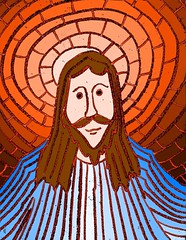
A stained glass rendering of Christ's new heaven and earth, as opposed to Eckhart Tolle's new age nonsense and Oprah's weird ways.

A New Earth

Digital glass design for a new Church window

Saturday, February 23, 2008

Sunday Sermon: What The World Needs Now

There’s a new book coming out, called the “Third Jesus.” It’s written by Deepak Chopra who is this generation’s equivalent of Von Daniken. He writes a lot of best sellers about spirituality, especially of the New Age variety, and I have no doubt that this book will soon reach number one on the Times best sellers list.

It’s sad that this kind of junk theology can become so popular and soaked into the precious souls of millions of modern people. They lap up this kind of godless garbage and pore over its contents without opening up the Gospels to find the real Jesus. They would rather read the warped interpretations of a Hindu guru-author whose cosmology makes them feel special. Chopra is a bit like Oprah when it comes to the theological world – it’s all about feeling good about yourself and discovering the god within you, instead of feeling good about Christ and the God around us.

Here’s what Deepak has to say about Christ, or more precisely the Three Christ’s that we know:

First, there is the historical Jesus, the man who lived more than two thousand years ago and whose teachings are the foundation of Christian theology and thought. Next there is Jesus the Son of God, who has come to embody an institutional religion with specific dogma, a priesthood, and devout believers. And finally, there is the third Jesus, the cosmic Christ, the spiritual guide whose teaching embraces all humanity, not just the church built in his name. He speaks to the individual who wants to find God as a personal experience, to attain what some might call grace, or God-consciousness, or enlightenment.

In other words, all that the world needs now is a Hinduistic Cosmic Christ and jettison the Christ whose church embraces and engages the world in the midst of its poverty, brokenness, and sin. For those of you who don’t know, this is classical Hindu teaching where the poor and miserable are neglected, whilst the priestly and noble classes are worshipped and exalted.

Deepak is so far off the beaten track as far as real Christianity is concerned. He’s falling into the old trap of syncretism – trying to get Christ to fit his theories instead of trying to fit his life into Christ’s ways. Deepak may be successful at selling millions of books with his meaningless mumbo-jumbo, but as far as doing the work of God’s Kingdom – well, let’s put it this way: you’ve got to be in it, to spin it.

Let me show you how today’s scripture reveals to us the One Complete Christ, and not the Three Jesus’ that Chopra is promoting.

Look at verse 6:
6 Jacob's well was there, and Jesus, tired as he was from the journey, sat down by the well. It was about the sixth hour.

What does this tell us about Jesus historically? It reveals to us that Christ was a human being. He was tired and he was thirsty. He had walked for several miles, going from one town to the other. It was the sixth hour, which meant it was the middle of the day. Christ’s energy was sapped from the heat of the mid day sun. He needed to rest his weary feet. He needed to stop and relax for a while. And he desperately needed something to drink.

This is the historical Jesus. This is a man who is weary and exhausted; tired and thirsty; hungry and all alone. What Jesus needs now is a kind word and a smile, and a refreshing drink of cold water.

Now we didn’t need Deepak to tell us that – we didn’t need his convoluted book to let us know that Jesus existed and was a frail human being just like the rest of us. All we had to do was read the Gospel and, lo and behold, there He is! In fact, Jesus is so human, so much of a pathetic, weary man that He has to turn to a woman to help Him out! Just another typical guy, needing a woman to take care of Him.

But what about this Second Jesus that Deepak writes about? What about this Son of God who institutes a new religion for devout believers?

Well, let’s look at the passage again. Jesus asks the Samaritan woman for water. Jews were not supposed to ask Samaritans for anything. It was beneath their dignity. Samaritans were unclean, unwashed, unholy people who were thought of as disdainful idolaters by the orthodox Jews. Because Jesus was a Rabbi, He should never have associated Himself with this Samaritan woman. And even worse, her own people didn’t even associate with her, which must have meant that she was immoral and adulterous, shameless and sinful.

But tired and weary as Jesus was, He wanted to reach out to this woman spiritually. Instead of being annoyed at her, Jesus says this to her:

10 "If you knew the gift of God and who it is that asks you for a drink, you would have asked him and he would have given you living water."

What does this mean? What is Jesus trying to reveal to her? He’s letting the woman know that He is not just a Jewish man looking for a strange woman in a strange land to help Him out. He’s beginning to minister to her, to rouse her curiosity, and to attract her soul to Him. He’s reaching out to this woman, who has been abandoned by her own community, with kindness and compassion, respect and dignity that she hasn’t known in such a long time. He’s having a conversation with her; He’s connecting to her heart and soul, not her body and beauty. He’s helping her to confront her past in order to heal her. He’s intervening in her life, in order to save her from herself.

And this is what Christ does through the church, in the world, generation after generation. His words, His ways, His work continues every single day through the life, ministry, and mission of His church on earth. Our dogma reveals to us that Jesus is the Son of God and through Him alone salvation is found. He institutionalizes and sustains the Church, in order to make the world a better place, a loving place, a compassionate place. What the world needs now is this Jesus who reaches out to the outcasts and embraces sinners, in order to bring them in from the fields of sin to the compassionate Kingdom of God.

You know recently I was upset with an American Episcopal Bishop who apologized to the Hindus in India for the 200 years of Christian mission in Indian society. “There are enough Christians in the world and we are sorry for trying to convert your people to our faith.” What a load of Universalist baloney!

I am not sorry that 200 years ago missionaries went to India to try to convince people that worshipping trees and rivers, stone idols and thousands of god and goddesses was wrong. I am not sorry that Christian missionaries stopped the sacrificial slaughter of babies to appease vengeful gods. I am not sorry that Christians sought to stop the acts of ritual suicide that took place, where widows old or young had to cast themselves onto the burning remains of their dead husbands. And I am certainly not sorry that Christian missionaries worked with and helped the millions of people who lived in the gutters of cities like Bombay and Calcutta and were treated as human filth and manure just because they were born as pariahs – outcastes – who had no chance of changing their inhumane treatment by the other Hindu classes.

Jesus is the Son of God and we are His church in the world, which is called to reach out into the world to bring His Gospel of repentance and restoration, compassion and confrontation to all people. The Historical Jesus is the same as the Institutionalized Jesus - we just have to keep reading the real Gospels, instead of the book-marketing baloney that Deepak Chopra and his New Age, Prosperity Gospel cronies keep churning out.

Finally, we come to this Third Jesus of Chopra’s book – the New Age Cosmic Christ – the One who speaks to individuals who want to have a consciousness of God, but as Chopra said on CNN the other day – not necessarily as part of a personal relationship, more of a spiritual awareness that God exists. In other words, giving us the ability to know of God, but not to be influenced, guided, or even judged by God.

When Jesus speaks to this woman at the well to engage her in a conversation and to eventually confront her sinful ways, He does so in order to affect a godly change in her life. He’s not doing it to pass the time of day or to wile away the hours in small talk, Jesus speaks directly to this woman to get her reconnected to God, to redeem her from her foolish choices, and to restore her to God’s love and favor.

Christ doesn’t talk to her to make her aware that God merely exists; He talks to her because, although God is displeased with her sin, He has not stopped loving her. This isn’t about merrily co-existing in the universe as Creator and creatures; this all about the reason why God created us in the first place – to have a loving, caring, and everlasting relationship with Him. That’s why Jesus says He has Living Water – water sustains all life on this planet – but God’s Living water in Christ sustains all eternal life in the Universe!

13 Jesus answered, "Everyone who drinks this water will be thirsty again, 14 but whoever drinks the water I give him will never thirst. Indeed, the water I give him will become in him a spring of water welling up to eternal life."

This is the Cosmic Christ that Deepak mentions, but not a Cosmic distant, uncaring, uninterested Christ – that’s Hindu theology – this is the One, True and Living Christ – who gets thirsty on a hot day, who preaches to lost souls, who offers eternal salvation to all who come and drink with Him! There is no such thing as a Third Jesus – just as there is no such thing as a third World, another false Hindu theology – we’re all part of One World and we all are called to believe in One Christ – historical, traditional, and cosmological – all Three in One!

The rest of John Chapter 4 deals with the confrontation and conversion of this Samaritan woman. In Christ, she finds what she truly needs – the love, mercy, and forgiveness of God. She takes this message back to her own people, who have shunned her and made her an outcast. Eventually, her own people are converted as well. They say to her: "We no longer believe just because of what you said; now we have heard for ourselves, and we know that this man really is the Savior of the world."

In other words, they make the connection with Jesus and place their lives and souls into His saving hands. The challenge we face today is this: are we willing to do the same?

Stushie is the pastor of Erin Presbyterian Church in Knoxville, Tennessee

Monday, January 21, 2008

Holy Star Wars! - Yodaptists or Jediterians?

A Jedi "church" has been born in a galaxy far far away – North Wales.

The Holyhead chapter of the self-styled Jedi Church, which claims up to 400,000 members worldwide, has sprung up thanks to brothers Barney and Daniel Jones, both 'Star Wars' obsessives.

The "church" is only one of a handful around the planet, said hairdresser Barney, 26, the Anglesey Order Minister, also known as Master Jonas Hero.

“Some people think it is quite interesting and will be interested but lots of people will ridicule us because it seems quite nerdy but we’ve had a good reaction so far,” he said.

“We think of it as proper lifestyle enhancement and it should be taken seriously, it can’t be bad if it makes life better.
“We live normal day-to-day lives. We are trying to take away the humour of it all and bring more structure so people take it more seriously.”
The "religion" was born as a result of a nationwide joke in the 2001 census when nearly 400,000 British citizens claimed their belief system was Jedi.

Now Barney and musician Daniel, 21 – or Master Mora Hero, self-appointed UK "church" leader – are getting their new movement off the ground.

Read the rest of the story here…

Sunday, January 20, 2008

New Age Religions - Same Old Problems

Recent Australian Study Published: New Age Religions breed unhappiness

By Chris Rizo at http://www.religionandspirituality.com

Replacing traditional religious beliefs with trendy, self-focused religions and spirituality may make people more anxious and depressed, a new study indicates.

An Australian survey of 21-year-olds in Brisbane suggests that the shift away from traditional and organized religious beliefs to New Age religions is not making young adults happier, The Australian reported.

The study by Dr. Rosemary Aird, a population health researcher at the University of Queensland, surveyed 3,705 people on their beliefs in God, higher powers other than God, as well as their church-going habits and other behaviors, the newspaper reported.

Aird said young adults who believed in a spiritual or higher power other than God were at greater risk of poorer mental health and deviant social behavior than those who rejected these beliefs.


Sunday, July 29, 2007

Sunday Sermon - Mysterious Promises

(Based on Ephesians 3:1-6)

Last weekend, Harry Potter was all the rage and many people lined up for hours at various stores all over the world, so that they could purchase the latest and last book about this modern young magician. For the past decade, millions of these books have been sold making the author JK Rowling one of the richest people in the world. Her own rags to riches story is in itself an example of how hard work, determination, and imagination can bring about well deserved fame and success. Seven books ago, JK Rowling was an unemployed single mom writing a story in her brother’s coffee house in Edinburgh, Scotland – today, she has even more wealth than her monarch Queen Elizabeth.

I guess mostly everyone got caught up in the Harry Potter craze. I even did a quiz on the internet to see which character I am most like. As I waited for the results to come in, I worried that I would end up being Siruis Black, the notorious prisoner of Azjekeban, or Severus Snape, the teacher of the Black Arts, or worst still, little Ginny Weasley, who has a crush on Harry Potter – but in the end my test results came back with a resounding 90% that my Harry Potter alter-ego is actually Albus Dumbledore, the headmaster of Hogwarts school that Harry attends. I guess that’s what I get for having a grey beard, teaching Sunday school and wearing robes!

But why is Harry Potter so successful? What has caught the hearts and minds of so many millions of people on the earth? Well, I think it’s because of several things. The books contain elements of magic, mystery and suspense – three ingredients that have sustained writers of books and religious communities for generations. When I was a teenager, Nancy Drew, the Hardy Boys, and Scooby Doo nourished my mind with magic and mystery. Dick Tracy, Batman, and Superman satisfied the generations before mine. And if you go back far enough, Tom Swift, Tom Sawyer, and Sherlock Holmes intrigued millions of readers with their own adventures, mysteries, and magic. It’s a formula that has worked since people were drawing in caves and telling stories around the tribal fires – it’s all about good versus evil with magic and mystery thrown in to make up a great story.

The element of mystery has always intrigued us. As human beings, the great unknown has always attracted us. Why else did Columbus set off in 1492? He wanted to explore the great unknown of his age, of what lay beyond the western horizon of the Atlantic Ocean. Why else did pioneers head out on the Oregon Trail in their wagons to settle on the other side of this continent? They wanted to begin a new life, in a new place, and explore the possibility of being successful. And why else did President Eisenhower sing the Space Act on this day in 1958 in order to establish NASA? He wanted America to explore the final frontier of space – that great unknown of which we still hardly know anything, and in which we are only making small steps.

Mysteries are what make us who we are. We are attracted to them – why else do you think that Adam and Eve succumbed to temptation in the Garden of Eden? Curiosity got the better of them – the tree of knowledge was a mystery to them and they just had to experience it. They were attracted to a mystery and they were tempted by the great unknown. They wanted something they couldn’t have, and they were frustrated by it. They needed to possess the fruit and eat it because they felt incomplete, insecure, and inconsolable without it. They wanted to solve the mystery, so they stole the fruit and set humanity on a course of unending curiosity, exploration, and wanderlust that will be with us until humankind returns to the dust from which we came.

Mysteries get the better of us. They become our obsessions, our longings, and our desires. We want to know how things will turn out, which is why millions of people queued up for hours last weekend trying to get their hands on a book. They wanted to be amongst the first to read all of the 760 pages to discover how it all turned out – and if you want to know, then don’t ask a Harry Potter fan – they’re good at keeping secrets – you’ll just have to buy it yourself, or wait for the movie version to come out in 2010.

Mysteries were a way of life for the people of Ephesus, which is why Paul mentions the word here in today’s Bible passage three times. The Ephesians lived in a place that was built upon magic, superstition, and mystery. The temple of Diana was a mysterious place where ancient rituals were carried out. Sacred secrets about the temple were passed from generation to generation amongst the priests. It was a place where people came to make pledges and sacrifices, to look for blessings and benevolence, to express their love of Diana their goddess, and to ward off the wrath of other Greek gods.

You see life was a mystery to the Ephesians and the people of that time. Disease, pestilence, famine, and war were rampant throughout the region. A person could be healthy one hour and dead the next. Infant mortality was high and life expectancy was low. People felt insecure all of the time, so they clung to mystery and magic, superstition and secrets as the means to ward off evil, to escape disaster, and to prolong their lives.

There were even mystery cults all over the region that people participated in. Most of these cults involved the use of drums and music, hallucinations and visions, virgins and temple prostitutes to placate the gods and bless their devotees. In other words, sex, drugs and rock ‘n’roll were as popular then, as they are today. People believed that if they could learn the secrets of these mystery religions, then they could guarantee long life, wealth, health and fame. Penetrating the Mystery was the means of discovering the real secrets about eternal life.

And we still are like this today – think about it. Famous people and ordinary people are looking for the secret of success, the secret of acquiring wealth, the secret of staying young and keeping fit. We all want to ward of death and dying, disease and discomfort, insecurity and inferiority. We all want to be something special, do something great, complete something that will change the world. We want to know that our lives have made a difference and that our time, our talents, and our treasures have been used to the best of our abilities, to reward ourselves and take care of our loved ones. That’s why books like The Secret, or the Da Vinci Code, or the Purpose Driven Life appeal to us – we all want to feel that we’ve solved the mystery of life and why we exist in the first place. That’s why people like Madonna are drawn to the Kabbalah – old Hebrew wisdom with hidden secrets in the Bible text – or Tom Cruise is drawn to scientology – a higher wisdom and greater spiritual plane than anyone else – or even Shirley McLaine and Reba who feast upon New Age ideas in order to cast aside their insecurities and put themselves at the center of the universe. It’s all the same stuff that’s been tried for thousands of years. It’s all the same old tested and tried ways of finding the meaning of life, the universe and everything that was even ancient history to the Ephesians two thousand years ago.

But Paul touches their hearts and minds; he penetrates their souls and spirits when he uses the word mystery and links it to Christ. He tells the people that the mystery they are longing to solve can only be found in Jesus. The purpose that they are yearning to find for their lives can only be discovered in Christ. The reason for their existence in the entire world can only be revealed through Jesus Christ for, as the scriptures say, there is no other name under heaven, given to humankind, through which we can be saved.

Life was a mystery way back then. Life is till a mystery today. We cannot hope to understand everything about life, but we have a Guide who has experienced life at its best and worst who can, if we are willing, lead us through this journey of existence and bring us to the shores of eternity. As Paul himself writes,

this mystery “has now been revealed by the Spirit to God's holy apostles and prophets. This mystery is that through the gospel the Gentiles are heirs together with Israel, members together of one body, and sharers together in the promise in Christ Jesus. “

In other words, what was once given to the Jewish people almost four thousand years ago, has now been given to the entire world. The magic of life and the mystery of existence are rolled into one. We live because God loves us. We exist because God wants us to love His Son. It’s as simple as that. As the old question from the catechism once put it: what is the chief purpose of man? To glorify God and to enjoy Him forever.

So, what have we learned this morning?
That we all love mysteries and seek to solve them.

That we are part of a mystery called life and each of us is on a unique and personal quest.

That we can look in all the wrong places and never be satisfied with anything.

That we can look to Jesus and discover that He is the key to unlocking this mystery. He is indeed the great magic of life, the universe, and everything.

Prayer:
There's Just Something About That Name

Jesus, Jesus, Jesus;
There's just something about that name!
Master, Savior, Jesus,
Like the fragrance after the rain;
Jesus, Jesus, Jesus,
Let all heaven and earth proclaim;
Kings and kingdoms will all pass away,
But there's something about that name!

Friday, May 18, 2007

Blogachute #3!!!

It’s Friday lunchtime! – which means blogachute! Time to jump off the blogplane and freefall into cyberspace until I land on the ground.

Today’s freefall takes us into the world of atheism, spiritualism and a lot of New Age stuff. I guess if we want to be relevant in today’s world, we need to know what we’re up against. After all, Paul preached on Mars Hill using the statue of an unknown god.

8000 feet - http://atheist1.com/blog/

A resourceful website for people who want to get rid of their religious burdens by turning away from God. I didn’t realize there were so many books! Maybe I should stock up on a few and review my systematic theology. Argumentative site, but applies comment moderation. I’ve asked a couple of questions here, but they never show up.

7000 feet - http://churchofintegrity.blogspot.com/

Lots of huggy, touchy, feely stuff going on here. Respect and tolerance for one another, although the blogger questions existence of God and the purpose of religion more than a few times. I guess this is how the other side think.


6000 feet - http://www.non-violent.com/

Otherwise known as Maryilyn’s Non-Violent Planet. Lots of great Peace Movement links and resources here. Nice philosophy going on, too. I like the layout and graphics. A cyber-encyclopedia of pacifism.


5000 feet - http://members.aol.com/AngriesOut/index.htm

Sounds a bit corny and looks a bit dated, but website is a great resource for family life and strengthening relationships. Lots of counseling tools and perhaps small group study stuff here. Definitely a bookmarker for Family ministries.

4000 feet - http://www.coloringtherapy.com/

An interesting site about the therapeutic use of coloring. You have to purchase the designs, though. Some ideas about transcendental meditation – I thought that went out of style when the Beatles broke up. I guess not.


3000 feet - http://www.expressyoursoul.com/

Website of Dr. Joy Lynn Freeman – a healing arts coach/consultant whose into yoga, dance, and creativity. Very pleasing and aesthetic site to view. Some of the links are painfully slow to view – or maybe it was just my computer. New Age stuff doesn’t go down well with my e-machine.


2000 feet - http://www.john-paolucci.com/

This blogachute jump is getting weird and wacky, almost like Alice’s Adventures in Wonderland or Milo’s journey in the Phantom Tolbooth. This website is about controlling the universe through your own thoughts. Sounds a bit like that new book “The Secret.”

The human imagination is a wonderful vehicle for endless creation.


1000 feet – back on course - http://www.labyrinthonline.com/

The definitive website about labyrinths. I walked one about three weeks ago and fell in love with the spiritual journey. Great site for history, meaning, and resources on labyrinths. One day, all our churches will have one – although some folks think that Presbytery is a bureaucratic labyrinth…but that’s me getting polity political…heheheheheh..

Zero feet – back to terra firma, as well as opus major