Showing posts with label Christ our High priest. Show all posts

Wednesday, March 26, 2014

Christian devotion: Crown Prince - Hebrews 5:5

Hebrews 5:5    So Christ also did not take upon himself the glory of becoming a high priest. But God said to him, "You are my Son; today I have become your Father. 

The main purpose of a priest is to make prayers before God on behalf of the people. Mostly all religions appoint holy men and women to intercede between their deity and the community at large. Festivals and feasts, holy days and religious celebrations from all over the world have this in common: at the center of the event, prayers are made to God, as well as petitions, confessions, and thanksgivings.

As Presbyterians, we practice the priesthood of all believers which is why we make our prayers of intercession and confession together in church. The only High Priest that we recognize is Jesus Himself and so we offer our prayers in Christ’s Name. Some people say that we miss out the ‘middlemen,’ but that’s not really what we do. Our prayers are always sacred and so we make them sincerely to Jesus, in the confidence and knowledge that He is always in the presence of God, His Father.

When Jesus left Heaven to come to Earth, He did not feel entitled to His appointment as the Chosen One. He still had to be given that High Office directly from God. This is why we read several times in the Gospels about God declaring and proclaiming that Christ is His Son. It is not just a public statement made in the presence of the disciples and other witnesses, it is a genuine calling from God to Jesus. It is the act of a High King conferring the title of Crown Prince on his son; it is the divine deed of the Creator bestowing the highest honor upon His child.

Today, we will all say prayers. We will make confessions about our mistakes, as well as intercessions about our circumstances. Whatever the case, and whenever we pray, we all need to remember this: our prayers are made to Christ and we send them to Him because He can then take them on our behalf and bring them before God. This is what our High Priest does; this is Christ’s duty as the Crown Prince of all Creation.

Questions for personal reflection

What am I praying for today? Am I truly giving my prayers to Christ?

Prayer:            Lord Jesus, we worship You as our High Priest and Heavenly King. We praise You as the Crown Prince of all Creation and the Lord of all our lives. Thank You for receiving our prayers, as well as for interceding each day on our behalf. May we serve, glorify, and honor You forever. In Your Holy Name, we pray. Amen.

John Stuart is the pastor of Erin Presbyterian Church in Knoxville, Tennessee. If you would like to ask a question or make a comment about today’s message, please send him an email to traqair@aol.com.


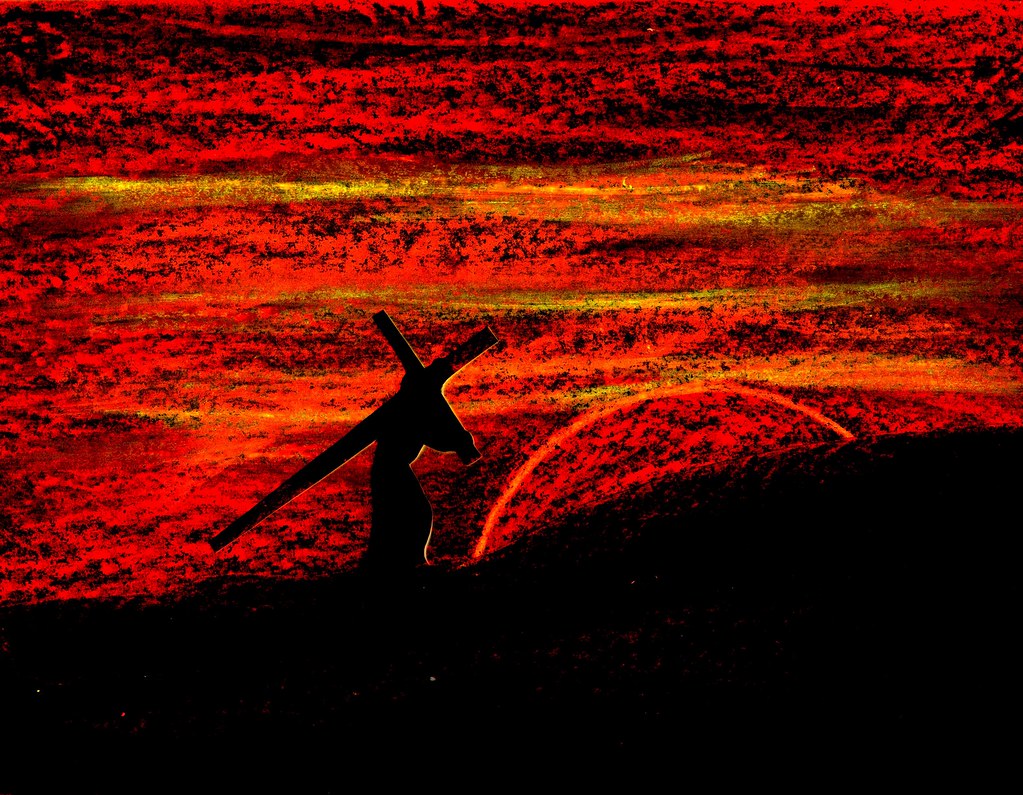
Today’s image is one of John’s latest Holy Week drawings. It’s called “Tormented Sky,’ which depicts Christ in silhouette carrying His Cross to Calvary. If you would like to view a larger version, please click on the following link: http://farm8.staticflickr.com/7280/13367529973_4ea429584b_b.jpg


Wednesday, April 24, 2013

Bible Devotion: What is an Ephod? - Exodus 39:2-3

Exodus 39:2-3                        They made the ephod of gold, and of blue, purple and scarlet yarn, and of finely twisted linen. They hammered out thin sheets of gold and cut strands to be worked into the blue, purple and scarlet yarn and fine linen--the work of a skilled craftsman.

What’s an Ephod?

There are some words in the Bible that only belong to the ancient cultures represented in its pages. ‘Ephod’ is one of them. The ephod was the metallic breastplate or vest that Aaron the High Priest wore when he entered the holy tabernacle to intercede on behalf of the Hebrew people. It was part of his uniform and a badge of his authority. The ephod was squarely shaped and contained twelve jewels on its surface which represented the twelve tribes of Israel. It must have been both a beautiful and an amazing piece of jeweled clothing for the high priest to wear.

By the way, some people believe that the arrangement of colors, threads, and squares was an ancient inspiration to the making of the first plaid/tartan cloths.

The ephod’s significance had many meanings. By wearing it, the high priest was recognized by God as being the one who could make confessions and prayers for all the people. Its precious stones represented the well-being of the whole community and signified God’s authority through Aaron to the people. It was also an expensive vestment, festooned with gold and rich jewels, with which the wearer honored God’s kingly, royal, and majestic presence. The people could confidently have their prayers of confession presented to God because the ephod wearer was welcomed into God’s sacred presence.

As Christians, we have a high priest, but instead of an ephod, He bears the marks of crucifixion on his head, chest, hands and feet. When we make our confessions in Christ’s Name, He stands before God as our both our Holy Savior and God’s Sacred Son. He is given the authority to forgive our mistakes, to pardon our messed up lives, and to allow us the precious opportunity of beginning again. We are a fortunate people because we are forgiven; we are exceptional creatures because Christ saves us.

Questions for personal reflection

How many times in the day to I ask Christ to intercede on my behalf? What does He do that makes Him my Savior?

Prayer:            Lord Jesus, thank You for being our High Priest. We are grateful that You are willing to intercede on our behalf each day, to forgive our many sins, and to restore us to God’s favor and kingdom. Without You, we would be lost to God forever. With You, we are blessed eternally. In Your Holy Name, we thankfully pray. Amen.

If you enjoyed this devotion, you can read more in John's devotional e-books like "The Light of Love" which has forty-two devotions inspired by the Gospel of John. You can find the book at this link: 

Today’s image is of the High Priest in Aaron’s time wearing the ephod and other vestments.