Saturday, September 30, 2017

Book review: Ordering Your Private World

A Book Review of Ordering Your Private World by Gordon MacDonald

                I’m usually not keen on books that are updated, especially ones that were written for churches and pastors over thirty years ago. However, the more I read of this book, the more I realized it has more relevance now than when it first appeared.

                Gordon MacDonald has a vast wealth of experience and knowledge which fit perfectly with the frantic pace that congregational ministers and church members are currently undergoing. His casual conversational style of writing imparts that knowledge in words and ways that are easy to understand, embrace, and apply.

                The chapters in the book are not overlong and the study guides at the back are well organized. This makes the book ideal for both personal spiritual development and small group discussions. The sections on organizing time are excellent and would be useful for any church leaders who need to refocus their lives on their responsibilities in church, at home, and even in their businesses.

                As a pastor, I found the fourth chapter on ‘Living as a Called Person,’ to be highly relevant to my current work. In the midst of plateaued or wilderness experiences, it’s good to know that God’s calling can be both renewed and reshaped as He sees fit.


                This is a book that I will turn to time and time again to help me refocus on the ministry that God has given me. Gordon MacDonald’s words, as well as the many illustrations he writes about, contain a lot of common sense, real wisdom, and spiritual discipline that many of his readers like me, will appreciate. This is an excellent book and one that I would heartily commend to any church leader and member.

Thursday, September 28, 2017

Wonder Woman - Ruth 4:10

Ruth 4:10  I have also taken Ruth the Moabite, the wife of Mahlon, to be my wife, to maintain the dead man’s name on his inheritance, in order that the name of the dead may not be cut off from his kindred and from the gate of his native place; today you are witnesses.” (NIV)

            It has been strongly suggested that the Book of Ruth was written in response to the xenophobia (fear of foreigners) that is exhibited in the Books of Ezra and Nehemiah, especially in the end chapters of those books where foreign Moabite women are cast off by their Jewish husbands in order to ‘purify’ the Jewish community. That unjustifiable expulsion is one of the reasons why I dislike both Ezra and Nehemiah, and very rarely preach from those Old Testament passages.

In some church circles, Ezra and Nehemiah are lauded as magnificent leaders and teachers who restored the broken Jewish community by rebuilding the Promised Land after returning from exile. Their words are often used as a rallying cry for getting people back to basics, but I find their actions questionable, especially when used against the innocent foreign women and children who were ousted from their families in a puritanical purge to make Judah great again.

            The Book of Ruth, when it was written, boldly reminded the restored Jewish community that one of their greatest leaders, King David, was a direct descendant of a foreign Moabite woman called Ruth. The lesson was clearly made: foreigners need not be feared and God can use outsiders to fulfill His work of salvation. In this case, Ruth the Moabite had a great-grandson, David, who was destined to become one of the most admired leaders and greatest king of the Jewish people.

            In these turbulent times when xenophobia is increasing across the world in many nations, as well as our own, the Book of Ruth can be a vehicle for reconciliation and restoration. Ruth’s faithfulness to her mother-in-law Naomi and her devotion to God teach us that we can find goodness, loyalty, and compassion in the hearts and lives of those who come from other lands. In fact, when we really stop to think about it, the Bible is a foreign book, full of foreign people, customs, and history which we have embraced and translated into English, not to make us or our way of life great, but to humbly accept God’s Word and give Him the glory for the great things He has done in foreign places, with foreign people, using foreign ways.

Point to ponder

Where do I see God working in the world? Why does He still use foreigners?

Prayer:  Lord Jesus, You lived, worked, and died in a foreign place. You spoke no English and followed foreign customs. You started Your life as a refugee and ended up being executed as a criminal. If You walked among us today, we would not notice You because You would be a peasant, a poor worker, and a foreigner. Help us to understand how profound those things are and how much they should affect our worldview. In Your Holy Name, we pray. Amen.

John Stuart is the Scottish pastor at Erin Presbyterian Church in Knoxville, Tennessee. If you would like to comment or ask questions about today’s message, please send him an email to Traqair@aol.com.


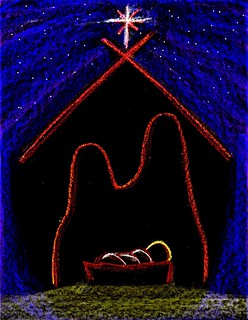
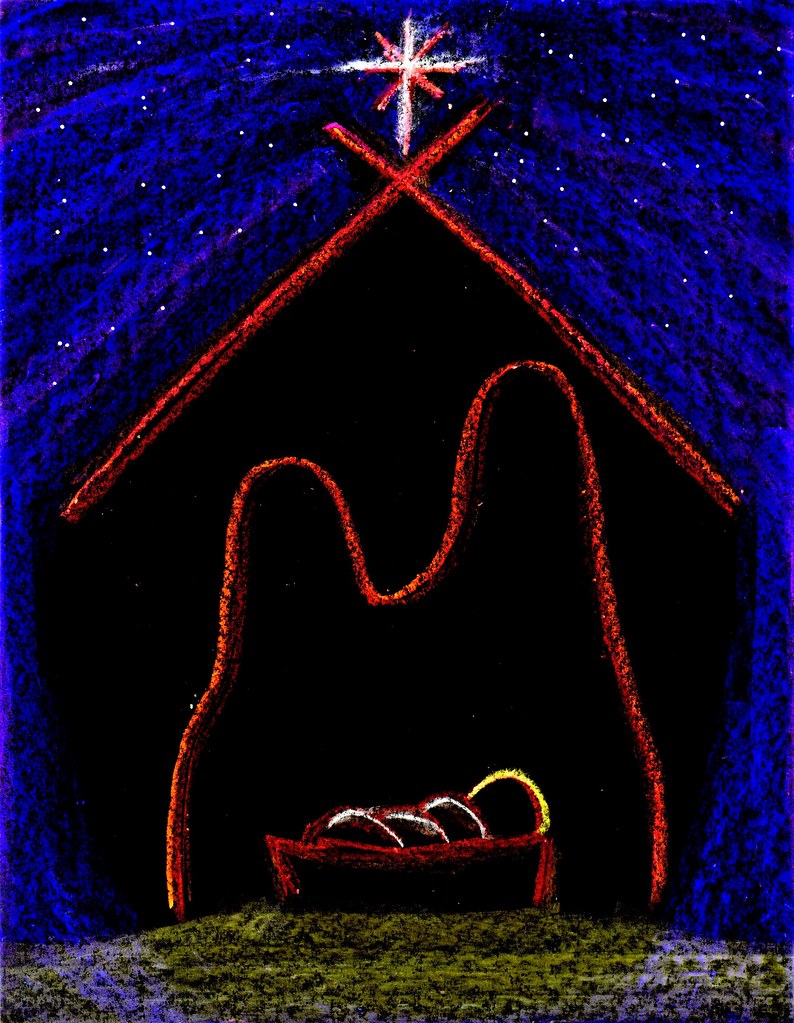
Today’s image is one of John’s Nativity drawings called “Undocumented.” If you would like to view a larger version, please click this link: Undocumented.

Tuesday, September 26, 2017

Book Review - The Master's Mind by Lance Hahn

A Clever Concept

The Master’s Mind – The Art of Reshaping Your Thoughts
By Lance Hahn

            I was drawn to this book by the title – ‘The Master’s Mind,’ which refers to Christ’s thought process as He engaged in ministry throughout His life. From the scriptures, I know that He was confronted by different groups and enemies who sought to steer Him away from completing God’s work of salvation. I hadn’t paid much attention to the idea that most of the battles Jesus faced took place in the mind. This book gave me a greater awareness of those things and helped me to understand the same kind of mind games, inner conflicts, and cerebral skirmishes that exist in my own Christian life.

            Hahn outlines his book as a process of developing skills to overcome the tyranny of random and sinful thoughts that we all experience. The success of our commitment to Christ depends on our focused approach to His life, work, and ministry. Just as Jesus was confronted with Satan, temptation, and lies, so we also face the same problems. How we overcome the world, the flesh, and the devil will only be accomplished by adhering our thoughts to those of Christ. Hahn points out that the outcome of resisting temptation so we may embrace God’s will, can become a positive process of thinking faithfully. As the author wrote,
                        ‘The more we say yes to God, the easier it is to say yes to Him the next time. The more we lean into healthy patterns of obedience, the more our bodies adjust to that response. With each victory, we struggle to earn in our minds, the next decision is smoother. It’s all about habit patterns.’

            As I worked my way through the book, I began to notice that I was practicing what Hahn describes. In recent weeks, I have had to deal with several things that have bothered me in the past. Hahn’s process of reshaping thoughts in Christ’s manner has enabled me to overcome those issues and be better prepared for events that have usually caused me some anxiety.

            Towards the end of the book, the author gives several practical summaries of what this reshaping of thoughts can do for the reader’s confidence and faith. These are great go-to remedies and reminders that could be used by individuals in the midst of conflict situations or even small groups facing a dilemma which requires unified thinking to solve the issue.


            Finally, I would commend the author on his use of scripture to convey this thought-shaping process. Hahn doesn’t twist or contrive the Bible passages that are quoted to fit his thoughts; instead, he plainly shows how the scriptures can be the building blocks of reshaping our thoughts in positive, dynamic and faithful ways. Overall, this is an excellent book that can be read by individuals for deepening their faith, as well as a very good choice for class study or book groups in churches and coffee houses.


Monday, September 25, 2017

A Dog's Tale - Ruth 1:20

Ruth 1:20 “Don’t call me Naomi,” she told them. “Call me Mara, because the Almighty has made my life very bitter.” (NIV)

            Two years ago, my wife and I brought a newcomer into our home. She was called Mara and she was only seven years old. Mara was a puppy-mill mama who had been kept in a cage for most of her life with other Shiatzu dogs. She had been badly abused and had been inhumanely treated to make money for the puppy-mill breeders. Mara had produced two litters of puppies a year and her body was covered in scars where the breeders sectioned her to ensure that the puppies were ready for special holidays like Christmas or Easter. Her life was very bitter indeed, so her name suited her because Mara means bitterness in Hebrew.

            We rescued Mara, but refused to call her by that bitter name. She is now known as Addie – short for Adorable – and we are blessed with her company and friendship. When she first came to our home, we had to keep her leash on because she ran away from us and hid in different corners of the house. She was scared and the only place that she felt safe was in the cage that we had. She would rest her head against the bars, touching them for security because that is all that she knew.

            These days, Addie is a wee loving and sociable dog who has become our best friend. She sits beside us on the sofa as we watch television and plays with her toys. Every now and then, she prefers her own company and wanders into her cage. I guess she’ll never be cured of the trauma she experienced, however, as the years go by, I know her life is becoming much sweeter.

            In today’s Bible passage (Ruth 1:1-22), we come across Naomi, whose Hebrew name means ‘sweetness.’ Sadly, she has undergone several painful tragedies with the loss of her husband and sons; she no longer considers herself to be ‘Naomi,’ but insists on being called ‘Mara’ because the bitterness in her life is hard to bear. She feels let down by God and believes that her life has been ruined. However, as the story of Ruth progresses, her sweetness will one day return through the grace of God.

            Perhaps you’re having a hard time right now. Maybe you’re experiencing some pain or tragedy that has left you with broken dreams and a bunch of bitterness. It could be you feel forsaken by God and bereft of any joy. Those moments can be very difficult to carry and endure, but even in the midst of painful circumstances that we all experieince, God is usually quietly, simply, and effectively carrying us.

Point to ponder

What is hurting me currently? Am I willing to ask God to help me?

Prayer:  Lord Jesus, You know the pain of being human and understand the suffering that we all experience in our lives. Help us to endure the hurt and overcome any fear or bitterness that overshadow us. In Your Gracious Name, we pray. Amen.

John Stuart is the pastor of Erin Presbyterian Church in Knoxville, Tennessee. You can read the church website at www.erinpresbyterian.org. If you have any questions or comments about today’s message, please feel free to send John an email to Traqair@aol.com.


Today’s image is of Addie 😊

Friday, September 22, 2017

Get Real, John! - 1 Peter 5:10

1 Peter 5:10    And after you have suffered a little while, the God of all grace, who has called you to his eternal glory in Christ, will himself restore, confirm, strengthen, and establish you. (ESV)

            There are some days when I feel sorry for myself and end up brooding over something someone has said to me or something that happened which embarrassed or offended me. I feel hurt and unappreciated which causes me to become gloomy and upset. I think that I should be shown more respect and credited for my years of wisdom, skills, and knowledge. I get frustrated and end up in a foggy mire of my own making. It’s as if I’ve decided to ‘doldrumize’ my life and be as stubborn or ornery as I want to be.

            I think my suffering is unfair and unmerited. I go about with a grey cloud over me and make others around me feel uncomfortable, unsure, or uneasy. Because I’m so focused on my issues, I don’t see what’s going on around me – how I’m embarrassing myself or how folks are beginning to avoid me. In other words, my suffering becomes self-inflicted and my sorrow is self-sustained.

            And then I see scenes on television or the internet which display real suffering and destitution. I look at the thousands of homes that have been destroyed by hurricanes and floods. I watch hundreds of people try to rescue children underneath collapsed buildings. I see parents weeping in anguish, old folks looking confused, and children who are shell-shocked because of the disaster, tragedy, and horrific loss of life, liberty, and security that they are all sadly experiencing. Their pain quickly puts my pettiness into perspective. Their tragic losses burst my injured pride and self-centered ways wide open.

            During those times of real awareness, I reject my manufactured, artificial, and sorrowful feelings. I am ashamed of my self-pity and the trivial burdens I conceitedly carry. I need to get real and truly understand that the world does not revolve around me, my feelings, or my upsets. There are billions of people on Earth who suffer much more than I have or ever will. Instead of wasting my compassion on me, I should make it available for them. Rather than be gloomy and petulant, I should be grateful and penitent.

Prayer: O Lord, forgive me! Amen.


John Stuart is the pastor of Erin Presbyterian Church in Knoxville, Tennessee. You can view the church website at www.erinpresbyterian.org. If you would like to worship with us, join us on Sundays at 11:00 AM.

Wednesday, September 20, 2017

We Have No King - John 19:15

John 19:15 But they shouted, “Take him away! Take him away! Crucify him!”
“Shall I crucify your king?” Pilate asked. “We have no king but Caesar,” the chief priests answered. (NIV)

            It was the ultimate act of betrayal. The chief priests in Jerusalem were the highest officers and leaders in the Jewish community. They represented centuries of their faith and all of the people. They were meant to be living examples of how to serve God and follow Him faithfully. They were supposed to be the upholders of the Law of Moses and all of their religious traditions. But in one hate-filled answer, they betrayed all that was dear to them and denied God’s authority over them.

            What was this act of betrayal? The answer that they gave to Pilate: “We have no king but Caesar.” God was their King and He was their Sovereign. The whole of Jewish history was built upon having no other god or ruler before God. Sure, there had been kings in the past who tried to rule the people as God’s chosen servants, but there was always a struggle between being ruled by God and governed by local kings. In the Book of Judges, the great warrior Gideon refused to be made king with these words: ‘I will not rule over you…the LORD rules over you.’ (Judges 8:22-23).

            When the chief priests said to Pilate that only Caesar was their king, they were betraying all of their beliefs in God and trading them in for a foreign despot to rule over them. Their hatred for Jesus was so intense that they were willing to displace God with a Roman Emperor. It was a scandalous act of betrayal and one which doomed Jerusalem. Forty years after this event, the Roman Emperor crushed the priests in Jerusalem and destroyed most of the great city. Allying their faith with a tyrant brought this upon themselves; putting their faith in a political figurehead created a situation where eventually their religion and nation lost God’s protection and wrought calamity on themselves.

            As Christians, we are supposed to remind ourselves each day that Jesus is our Savior, Lord, and King. Our allegiance belongs to Him and we are meant to serve His ways by applying His teaching in our daily lives. His words and ways are specifically meant to overrule any notions or ideas that go against God’s Will. Christ is our only King on Earth and in Heaven. If we displace Him with any other being, then just as the chief priests sadly did long ago, we betray Him.

Point to ponder

How often do I let Jesus shape my ideas, opinions, and choices? Am I guilty of rejecting Him in order to follow other people and other ways?

Prayer:  Lord Jesus, You are our King and there is no other power or person who can take Your place. We call ourselves Christians, but we can only prove this to be true by how we embrace and apply Your words. Keep us from displacing Your authority and help us to truly serve You. In Your Holy Name, we earnestly pray. Amen.

John Stuart is the pastor of Erin Presbyterian Church in Knoxville, Tennessee. You can read the church website at www.erinpresbyterian.org. If you would like to send John a question or a message, please email him at Traqair@aol.com.


Today’s image is one of John’s church banner designs called ‘Christ is King.’ If you would like to view a larger version, please click this link: King.

Thursday, September 14, 2017

True Love - John 16:27

John 16:27    No, the Father himself loves you because you have loved me and have believed that I came from God. (NIV)

            We live in a world where many people believe that God loves everyone, therefore, we can do whatever we want and God won’t mind. Sadly, it’s the biggest misconception that good folk have, and may even be a questionable idea which promotes a teaching of false assurance. It’s very easy to embrace this impression because none of us are comfortable with the notion that some folks are not loved by God. Even as a pastor, I struggle with this one but when I see the consequences of a carefree, casual approach to faith – moral anarchy, self-indulgence, and narcissism -  I question the veracity of such a popular misconstrued philosophy.

            As usual, when I get perplexed about this, I look to the Gospels and try to focus on what Christ actually taught, as opposed to common misunderstandings of what He said and did. In today’s passage (John 16:16-33), I am intrigued by Christ’s remark that God solely loves the disciples simply because they love and believe in Jesus. As a parent, I can understand this – whenever I see my daughters in the company of good and reliable friends, I love those friends dearly for loving my daughters. I think God, as Christ’s Father, felt the same way about the disciples who truly loved, believed, and supported Jesus. This, in turn, causes me to ponder on the whole idea: does God truly love us when we faithfully love and believe His Son?

            If this is the case – and remember, it comes from Christ’s lips – then doesn’t the Church do a disservice to Jesus, as well as to the world, when we dilute the faith by presenting it as a vehicle for being nice to others rather than being true to God? As I see congregations dwindling in mainline Christianity, it makes me wonder if our one-god-fits-all message has lulled us into a false sense of security and sadly doomed many people, including our own loved ones, into being separated from God forever for not truly loving and believing in His Son.

Point to ponder

Who do I truly believe that Jesus is? Is this what God expects me to believe?

Prayer:  Lord Jesus, Your words often challenge us and Your ways confront our choices. Open up our hearts and minds to Your Gospel. Help us to read Your life story and teachings carefully, so that we may live our lives by loving You faithfully. In Your Holy Name, we pray. Amen.

John Stuart is the pastor of Erin Presbyterian Church in Knoxville, Tennessee. You can read the church website at www.erinpresbyterian.org. If you would like to communicate with John, please send him an email to Traqair@aol.com.


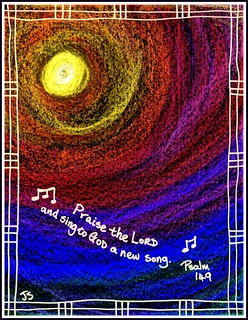
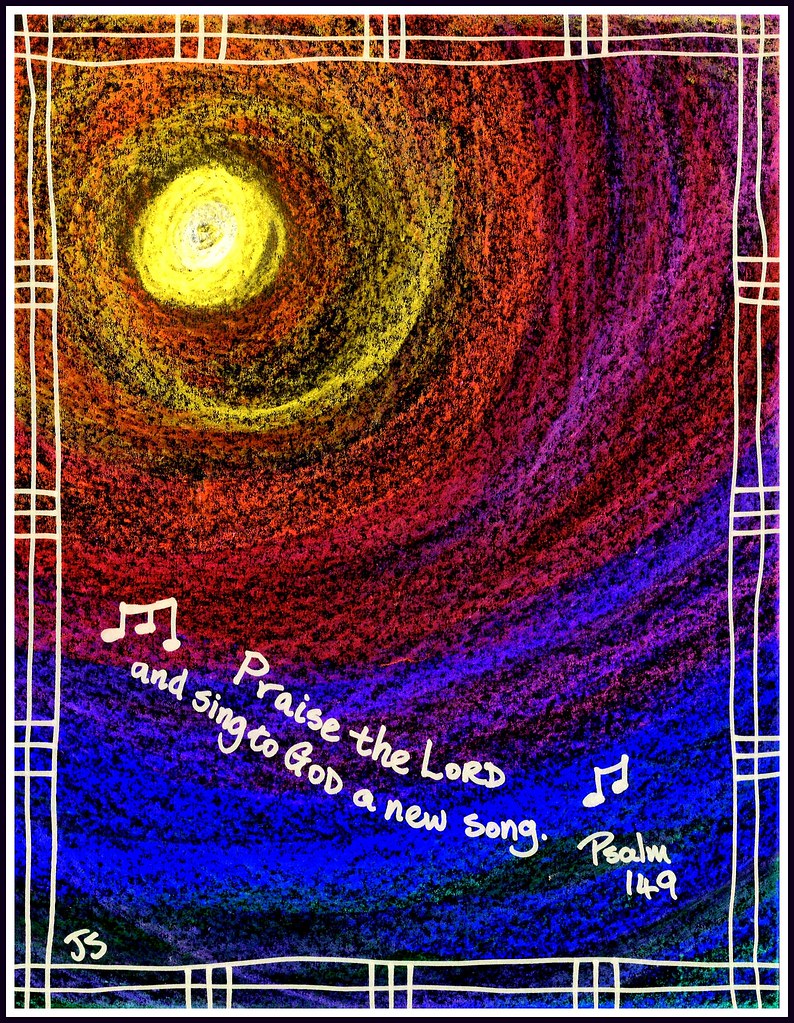
Today’s image is one of John’s psalm drawings based on Psalm 149. If you would like to view a larger version, please click this link: Psalm149.

Tuesday, September 05, 2017

Crucial Event - John 12:32

John 12:32 (Jesus said) “And I, when I am lifted up from the Earth, will draw all people to myself.” NIV

            The Cross is what makes us Christians because we humbly accept that Jesus died for our sins. Whether or not we are repulsed or deeply saddened by the brutality of His crucifixion is not important; what is absolutely crucial - a word that has its roots in the Latin term for cross – is that we understand our salvation can only be offered to us because of Christ’s death on the Cross at Calvary.

            It would be a lot easier for us if God would just accept who we are without getting His Son involved. We could all make a strong case for ourselves and give plenty of reasons why God should allow us eternal life, but the truth of the matter is this: we can do nothing by ourselves to earn salvation; it only comes to us through Jesus, our crucified Lord.

            This is why Christ told His disciples and people that when He would be lifted up – hoisted on a cross – He would draw all kinds of people to Himself. Today, we know this is true because all over the world churches exist and within almost all of them, we will find a cross.

            Wherever we are today and whatever we do, let’s take time to reflect on Christ’s Cross and be truly thankful for how it has given us the wonderful opportunity of being restored to God for all of Eternity.

Point to ponder

When I look at a cross, what does it mean to me? How crucial is Christ’s Cross in my life?

Prayer: Lord Jesus, we can never repay the everlasting debt that we owe to You for dying for our sins. Instead of being eternally separated from God, You have graciously allowed us to be restored to His Kingdom and favor. Thank You for this outstanding and undeserved gift. In Your Holy Name, we humbly pray. Amen.

John Stuart is the pastor of Erin Presbyterian Church in Knoxville, Tennessee. You can read the church website at www.erinpresbyterian.org. You may also send John an email to Traqair@aol.com.


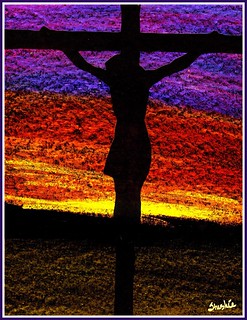
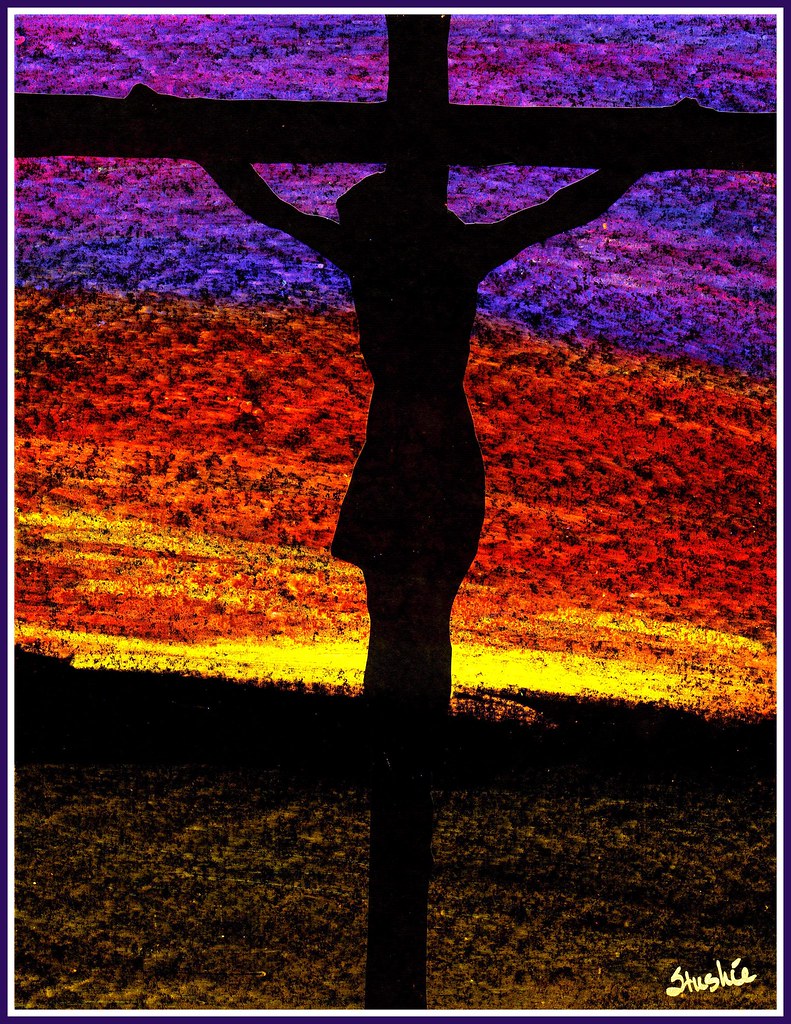
Today’s image is one of John’s Good Friday drawings called ‘Powerless.’ If you would like to view a larger version, please click this link: Powerless.

Saturday, September 02, 2017

Blessed Beatitudes


An updated version of the Matthew 5 Beatitudes

Blessed Beatitudes
Happy are those who are spiritually empty,
for they shall be filled with the fullness of God’s love.
Cherished are those whose loss is painful,
for they will be supported by loving friends.
Respected are those who seek to be humble,
for they will make the Earth a better place.
Empowered shall be those who long for justice,
for all their prayers will be fully heard.
Favored are those who act graciously,
for they will be embraced by the grace of God.
Truly loved are those who are simply sincere,
for they will know God’s faithfulness.
Anointed shall be those who strive for peace,
for they display the heart of God.
Encouraged shall be those who suffer for what is right,
for all God has, will be given to them.
John Stuart, September 2017

Friday, September 01, 2017

Church Meeting Devotions

September is usually when local churches begin their calendar year. Programs and projects, classes and congregational gatherings which have been set aside for summer, get back into their full swing. As the people of God gather for different events - classes, studies, dinners, team meetings, and boards, pastors and other church leaders are often requested to begin the events with a short devotional.

Over the years that I have served as a pastor, I have written hundreds of devotionals which are short and to the point. I've used them with the congregation I serve, as well as other meetings in other churches. years ago, I had to hand write or print out those devotions, however, with the advent of tablets and kindles, I can now easily carry devotions with me anywhere.

The two e-books that I have written for pastors and church leaders contain 60 devotions each - 120 devotions in total, which is enough to last for several years. They can also be used as discussion starters for any small groups. Each devotion contains a highlighted Bible verse, a short commentary, followed by a quick prayer. All of the devotions have been tried and tested at various functions and gatherings where I was a participant.

Because pastors and churches normally work on tight budgets, I've kept the price down to $1.99 each or the equivalent of 3 cents a devotion :) Those pastors who have purchased these books have enjoyed reading and using them. For your convenience, I have listed them below this post.

May God bless all of your work for the Lord. May all of your hopes and dreams be fulfilled.

God be with you.